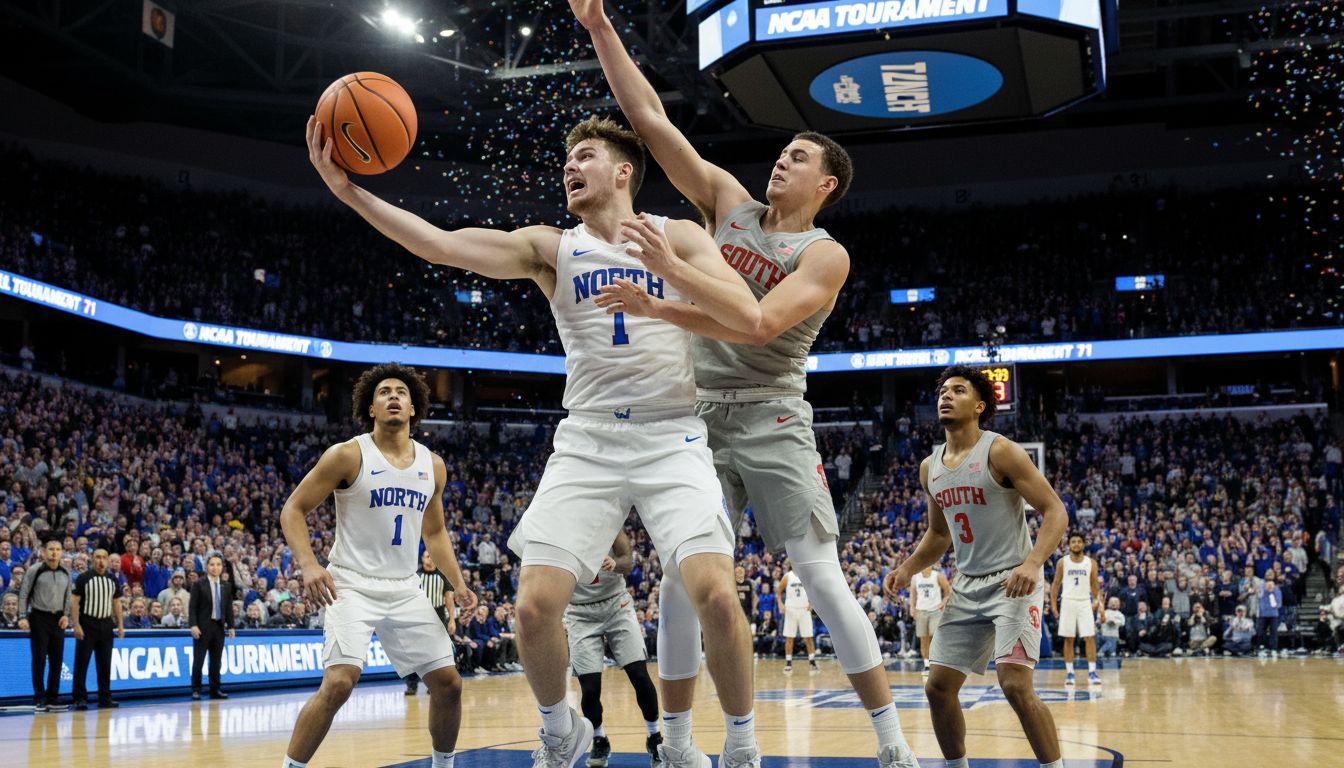
You watch enough March Madness, and the Sweet 16 starts to feel like a factory floor whistle change — the pretenders punch out, the real outfits stay on the line. This year’s men’s bracket gave us a little of everything: four nail-biters, four blowouts, and a mix of blue bloods and upstarts that feels about right for where college hoops is these days. We’ve got three No. 1 seeds still standing in Arizona, Michigan and Duke, plus UConn chasing a third title in four years, which is about as close to a dynasty as you get in the modern transfer-portal era. The Big Ten finally looks like the heavyweight it’s bragged about being, the Big East is basically riding UConn’s coattails, and Arizona’s out there winning games by playing like it’s 1994 in the paint instead of bombing away from three. Mixed in with all that is one of the toughest things in sports — a Nebraska team that made history, then had its dream season undercut by a simple, brutal mental mistake everyone in that locker room will remember for life.
Let’s start with the Big Ten, because for once the league isn’t just pounding its chest on talk radio, it’s actually backing it up on the floor. Six Big Ten teams reached the Sweet 16, and four punched through to the Elite Eight — Michigan, Purdue, Iowa and Illinois, a new high-water mark for the conference. For a league that hasn’t hung a national title banner since 2000, this feels like the best shot it’s had in a generation to finally shut everybody up about that drought. Michigan has the look of a classic, hard-hat No. 1 seed, rolling past Alabama behind its three-headed frontcourt of Yaxel Lendeborg, Morez Johnson Jr. and Aday Mara, who combined for 38 points and 25 boards. Illinois, meanwhile, has quietly climbed into the top tier of the analytics crowd thanks to a defense that’s gone from "yeah, they’ll score on you" to top-25 stingy, setting up an all-Big Ten regional final with Iowa that guarantees the league at least one Final Four slot.
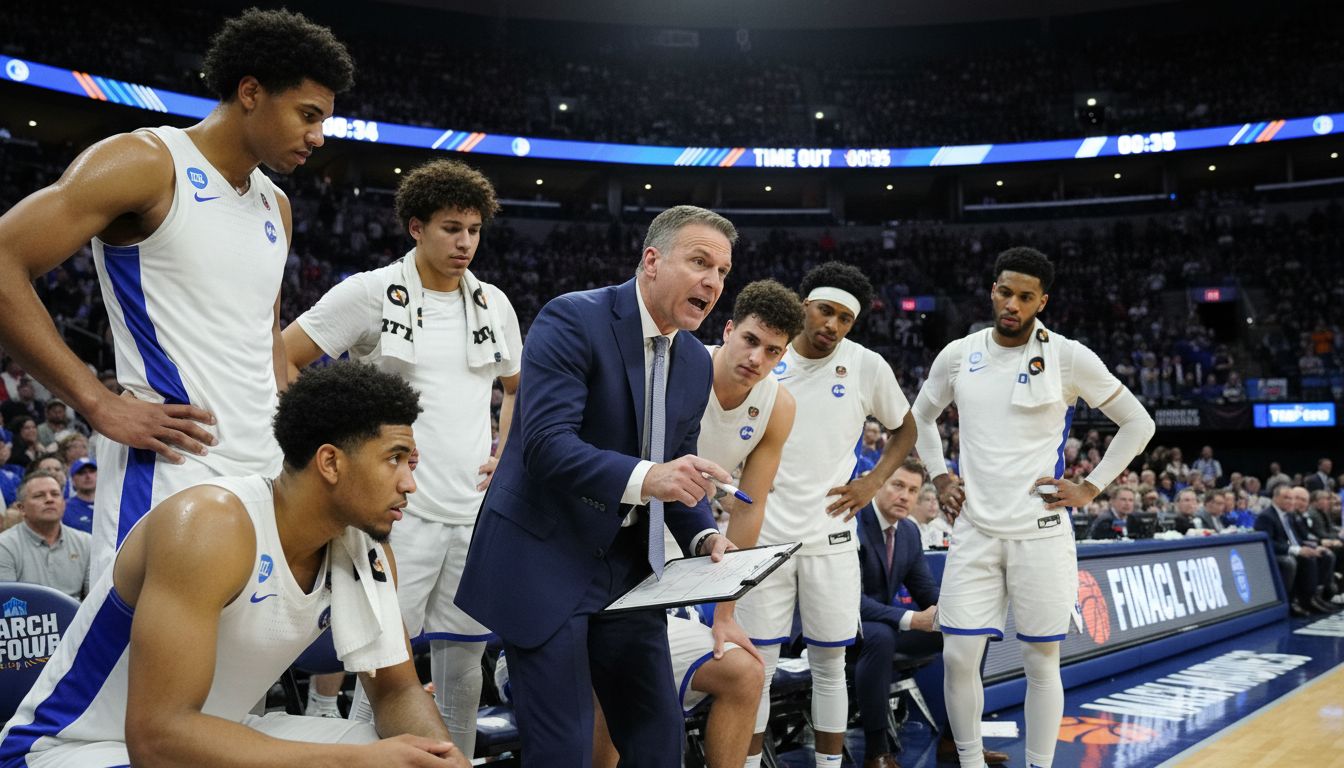
Head coach Dusty May put it pretty plainly after Michigan handled Alabama: college hoops is cyclical, and right now the cycle finally seems to be swinging the Big Ten’s way. He pointed to something fans don’t always see from the couch — how the money and resources have leveled out across the sport, and how the Big Ten’s environments and brands, plus the incoming West Coast schools, are changing the league’s identity. You don’t have to buy the Big Ten hype whole hog to see his point; when four teams from one conference are in the Elite Eight, that’s not just noise, that’s production. Purdue might be the biggest question mark of the bunch; the Boilermakers clipped Texas by two on a last-second tip, shot it well, and took care of the ball, but they still haven’t seen a true heavyweight like the Arizona squad waiting for them next. Still, from a working-person’s angle, there’s something satisfying about a conference that’s been mocked for years finally doing its talking with box scores instead of press releases.
On the flip side, the Big East story right now is basically one line: UConn or bust. St. John’s made a nice run by suddenly remembering how to shoot threes in March, but the Johnnies bowed out to Duke after getting whipped on the glass, in the paint and on second-chance points — the kind of toughness areas Rick Pitino teams usually own. That left the Huskies as the last Big East team standing, and they nearly coughed up a 19-point lead to Michigan State before their old heads stepped in and bailed them out. Veterans Alex Karaban and Tarris Reed Jr. scored UConn’s last 11 points to steady the ship and stretch the program’s ridiculous streak to 17 straight wins in Sweet 16 and later games. In an era when rosters turn over like a third-shift crew, UConn’s ability to keep an identity — hard-nosed, confident in big moments, and built for March — is a reminder that experience and continuity still matter, even if everybody talks about NIL and transfers first.
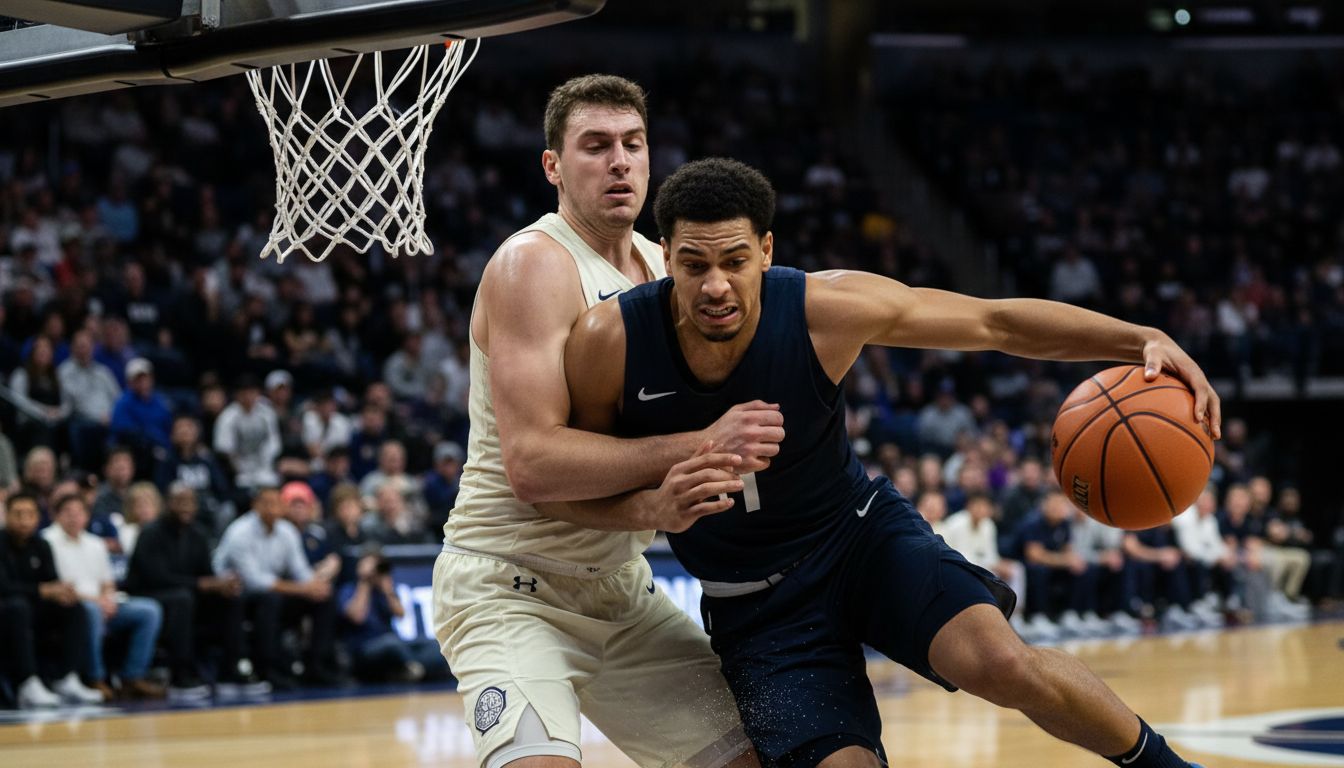
If you’re tired of watching games turn into three-point contests, Arizona is your kind of team. The Wildcats stomped Arkansas 109-88 by basically living at the rim and at the free-throw line, scoring 60 points in the paint and 30 from the stripe while only taking eight threes all night. That’s not a fluke either; they rank near the very bottom of Division I in three-point attempt rate and still sit top-five nationally in offensive efficiency. Head coach Tommy Lloyd has doubled down on a simple, old-school idea: be bigger, stronger and more relentless than whoever’s in front of you, then take the occasional wide-open three as gravy instead of the main dish. Duke’s Jon Scheyer summed it up earlier this year, saying Arizona has flipped the so-called modern game on its head by just beating teams up at the rim and on the glass, and it’s hard to argue when nobody on the roster shot under 50% in that Arkansas win.
Of course, March isn’t March without a gut-punch story, and Nebraska just delivered one that’ll get replayed in that state for decades. Down three to Iowa with under a minute left, the Huskers needed one stop to give themselves a shot to tie it — only they never really got to play the possession the way they drew it up. As Iowa inbounded the ball, Nebraska somehow took the floor with just four defenders, a miscommunication that left Hawkeyes forward Alvaro Folgueiras wide open to leak out for a layup and a three-point play. In a one-possession game, that turned into an instant six-point hole and, realistically, the end of Nebraska’s season, which had already reached new heights with the program’s first NCAA Tournament win and a Sweet 16 trip. Head coach Fred Hoiberg did what good leaders do after it was over — stood up, took full responsibility and refused to throw a single player under the bus — but you could hear in his voice how much it stung to have a once-in-a-generation run scarred by a moment like that.
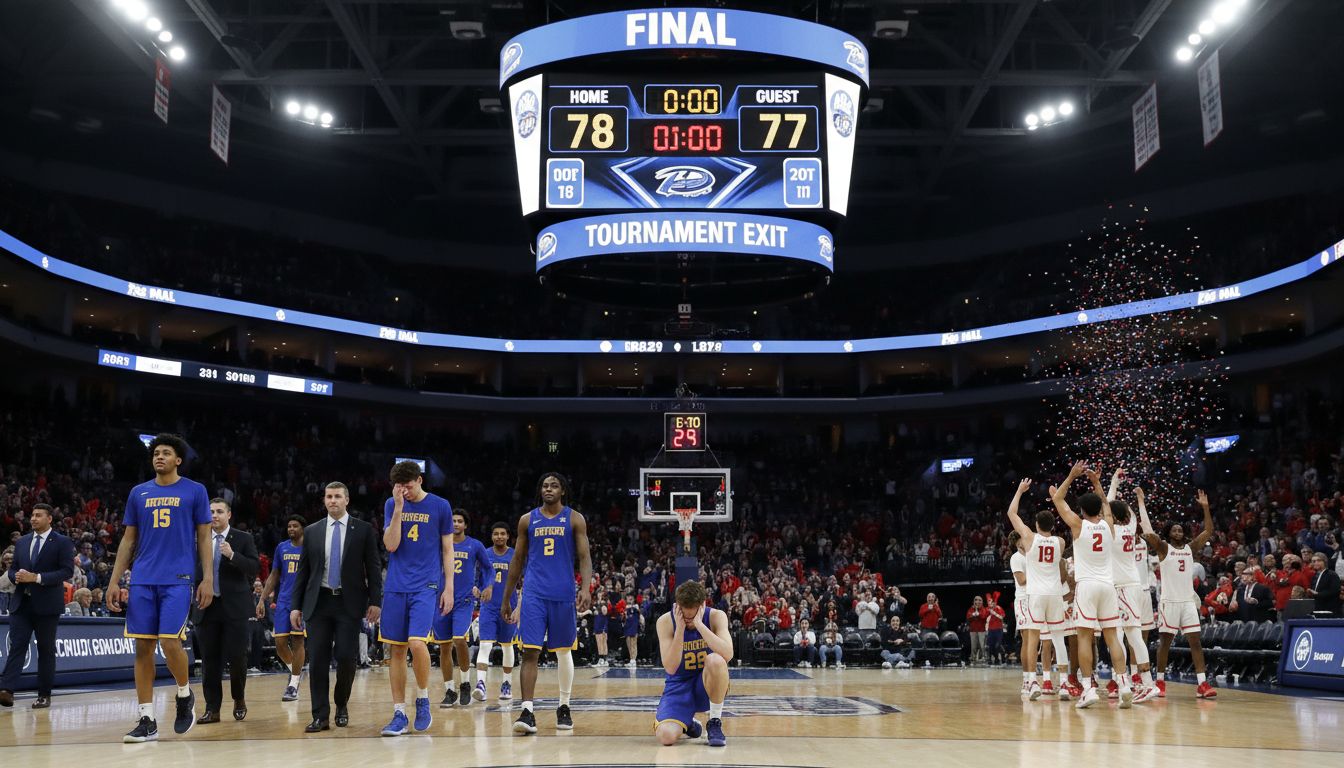
If you’ve ever worked a long shift and made a simple mistake on hour 11 that ruins the whole batch, you know exactly why that Nebraska blunder hurts so much. These are kids playing under the hottest lights they’ve ever seen, juggling game plans, noise, and emotion, and then one tiny breakdown in communication turns into the only thing people want to talk about online. It’s a classic example of how sports can be crueler than any boss on the planet; there’s no redo, just a clip that lives forever on social media and talk shows. But Hoiberg was right to focus on what this group actually did: most wins in school history, first NCAA Tournament victory, deepest run the program has ever seen, and a real bump in how people around the country see Nebraska basketball. In a sport that chews up rosters every spring, that kind of foundation matters way more than one possession, even if it doesn’t feel that way in the locker room tonight.
Looking ahead to the Elite Eight, every matchup has a little different flavor, like a Sunday potluck where every dish has its own story. Iowa and Illinois is a clash between a brand-new coaching star in Ben McCollum, who did nothing but win at the Division II level before jumping up, and an Illini team that’s finally playing enough defense to match its offense. Purdue and Arizona gives us the "are you for real" test for Purdue against the one team in the field that looks complete on both ends of the floor, top-five in both offensive and defensive efficiency. UConn versus Duke is a blue-blood showdown with an extra wrinkle now that Duke guard Caleb Foster is back from a foot injury, giving Jon Scheyer more options and ball-handling in tight spots. And then there’s Tennessee against Michigan, where the Wolverines have been excellent all year but have also drawn a fairly friendly path, dodging full-strength heavyweights while they try to prove they’re as good as the metrics say.
If there’s a common thread through all of this, it’s that March still rewards the same things most of us grew up hearing about from our old coaches and uncles yelling at the TV. Toughness on the glass still matters, whether it’s UConn surviving a run or Arizona bulldozing people inside. Communication still matters, as Nebraska learned the hardest way possible in the span of one in-bounds play. Experience and identity still matter, whether it’s a Big Ten finally playing to its potential or a program like UConn showing that culture can outlast roster churn. You can change the transfer rules, the TV money and the analytics, but in the end, it’s still five guys on the floor trying not to be the ones who blink first, and that’s why people keep clocking in to watch every March.