If you hang around betting Twitter long enough, you’ll notice a strange phenomenon: people talk about “locks” a lot more than they talk about sample sizes. So let’s do the adult thing and treat Saturday’s college basketball slate as a probability puzzle, not a personality test. Using the Michigan vs. Duke showdown, Arizona’s trip to Houston, and Kentucky–Auburn as our case studies, we can walk through how a data-first bettor should think about edges, line movement, and when to trust your gut—or more accurately, when not to. I’ll lean on publicly available metrics like KenPom, team profiles, and matchup tendencies, then layer on some commentary from a guy who spends far too many late nights staring at spreadsheets in Boston. These aren’t tout-sheet guarantees; they’re structured hypotheses about where the numbers suggest a bit of value might exist.
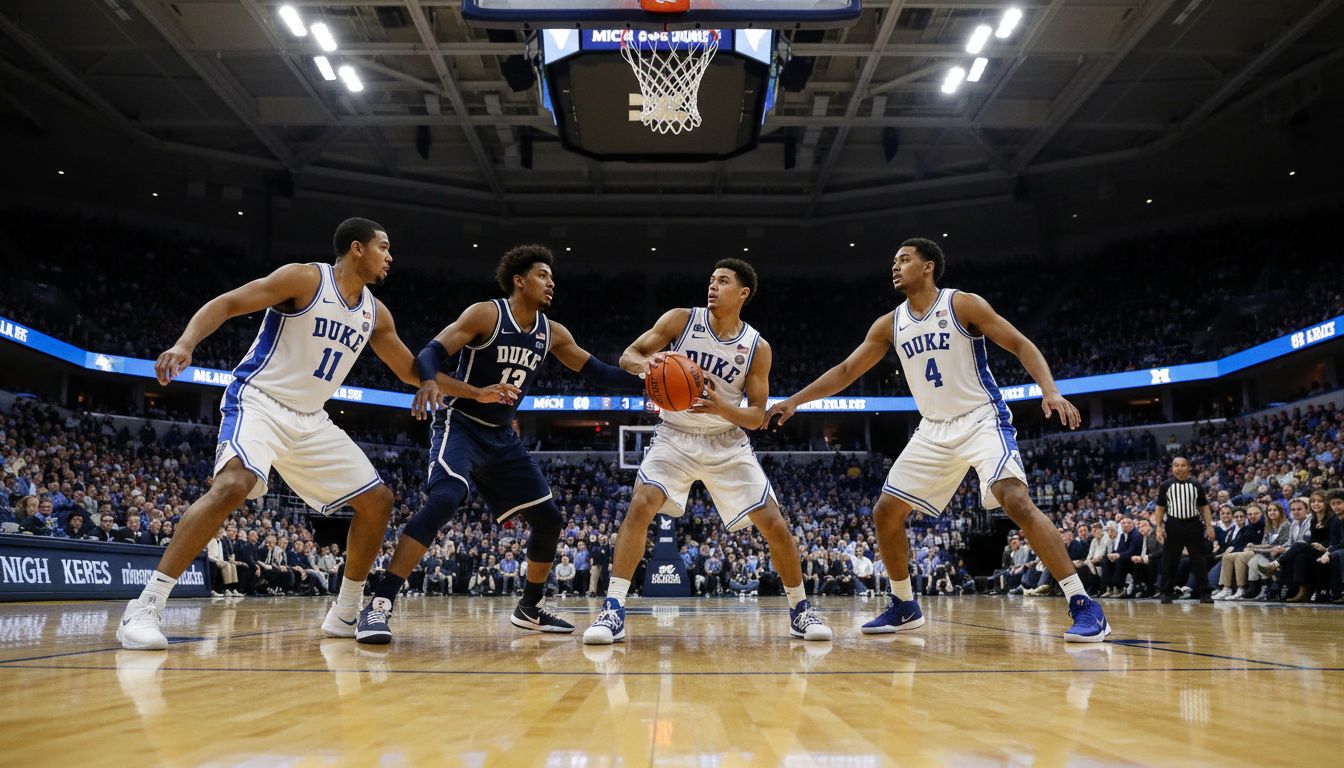
Start with Michigan vs. Duke, a matchup being sold as the “Game of the Year,” though mathematically it’s just another high-leverage data point between two legitimate title contenders. On paper, the teams are nearly mirror images: both elite defensively by KenPom standards, both relatively conservative from beyond the arc, and both comfortably in any rational person’s top 10. When two profiles look this similar, you should be suspicious of any strong conviction on a side unless it’s tied to a clear, quantifiable edge. In this case, the glaring variable is turnover margin: Michigan has shown vulnerability taking care of the ball, while Duke leads the ACC in forcing and converting turnovers into points. If you’re modeling this, a simple heuristic emerges—call it the “15-rule”: if Michigan hits 15 or more turnovers, Duke’s win probability climbs meaningfully above market expectations.
The market’s total of 148.5 implies a game that’s fast but not reckless, with both offenses reasonably efficient against elite defenses. Given that both defenses are top tier and neither offense is built around heavy three-point volume, the Under has structural support: fewer threes generally mean fewer high-variance scoring bursts, and both teams’ middling free-throw percentages introduce more downside volatility than upside. That doesn’t mean the Under is destined to cash; it means that, conditional on the pace staying moderate and whistles not turning the game into a free-throw parade, the Under has a modest expected value edge at the opening number. My lean would be Under 148.5, with the expectation that sharper money nudges the total downward by tip, collapsing any remaining edge. If you’re betting into this, understand you’re wagering on the defenses’ ability to dictate style and on Michigan to avoid gifting Duke easy transition points off live-ball turnovers.
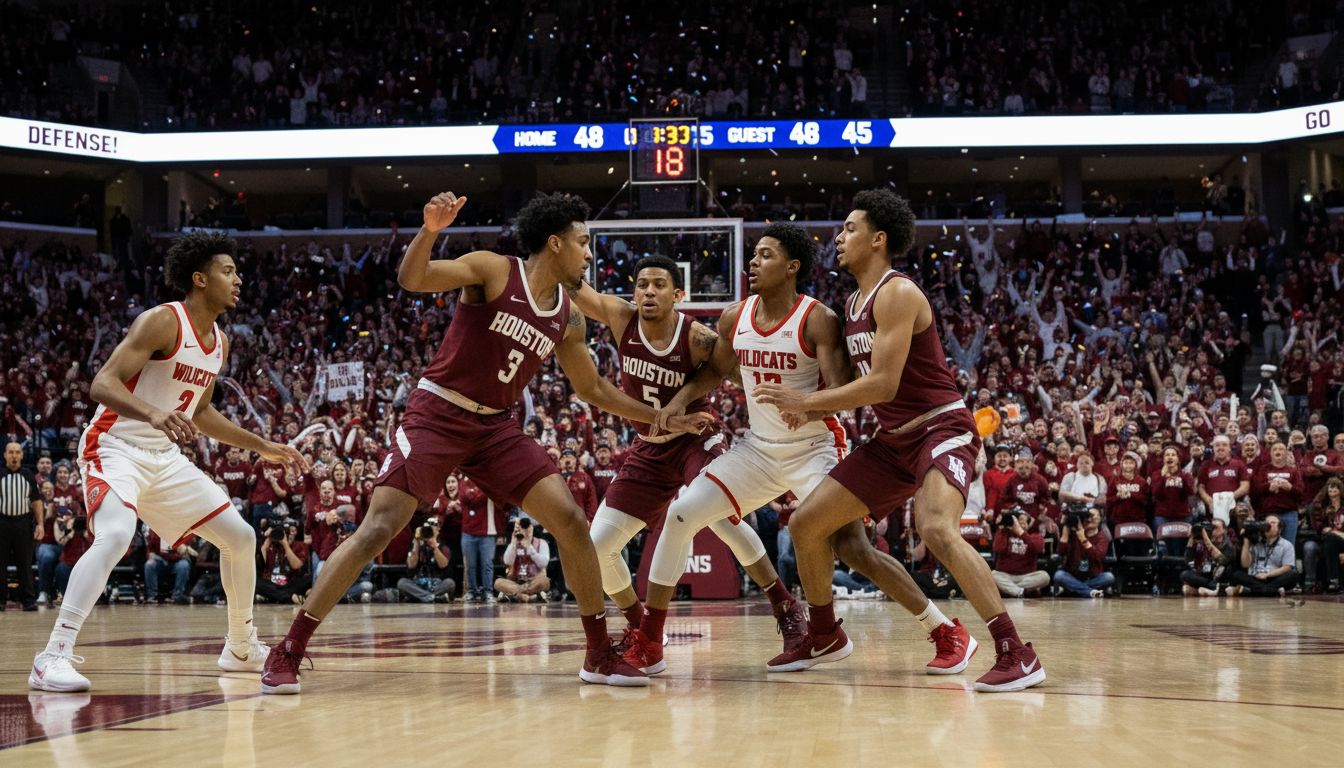
One of the easiest ways to donate money to sportsbooks is to bet purely on vibes in high-profile conference games, assuming the spread is “too high” because it feels disrespectful. Arizona at Houston is a good example of where that instinct can mislead you. The opening Houston -3.5, quickly bet up across the market, reflects both an analytically generous home-court valuation in the Big 12 and strong respect for the Cougars’ overall profile. On most metrics, this game is close to a toss-up on a neutral floor, which tempts some bettors to reflexively grab the points with Arizona. But matchup specifics matter: Houston’s one semi-visible defensive leak is defending the three, while Arizona ranks last in the Big 12 in three-point attempts per game, meaning they’re poorly positioned to exploit it.
When the structural weakness of one team doesn’t cleanly align with the structural strength of the other, you should be cautious assigning too much weight to that “weakness” at all. In this context, backing Houston at -4.5 still passes the smell test, especially with the Cougars coming off a tight loss to Iowa State and entering a critical stretch that includes Kansas. Motivation narratives get overused, but they matter at the margin when they interact with style: Houston’s physical, half-court grind tends to travel well and scale up under pressure, while Arizona’s offense loses some bite when it can’t generate clean looks early in the clock. The line move from -3.5 toward -5.5 isn’t mysterious sharp magic; it’s the market collectively pricing in a robust home edge plus the matchup asymmetry on the perimeter. By the time this number stabilizes, it’s more “lean” than “fire,” but Houston -4.5 or better is defensible within a data-first framework.
Kentucky vs. Auburn is the sort of game where narratives are screaming at you, which is exactly when you should slow down and force yourself back to first principles. Auburn has dropped five straight, their defense has cratered—particularly on the perimeter, where they’re dead last in the SEC at defending the three—and they’ve lost the stabilizing force of a legendary coach in Bruce Pearl. Kentucky, for its part, is hardly pristine, coming off back-to-back losses to Florida and Georgia, but their offensive ceiling remains considerably higher than Auburn’s current form suggests. When you see a struggling favorite with an unraveling defense laying points against an opponent that can score in bunches, you should at least question whether the market is over-weighting pre-season priors and brand perception. In practical terms, that translates into value on Kentucky +2.5 and a lean to the Over 156.5, assuming neither team suddenly discovers defensive coherence overnight.

From a modeling standpoint, high totals like 156.5 look scary to casual bettors, but the question is not “Will this be a track meet?”; it’s “Is the implied pace-and-efficiency combination unreasonable given recent performance and matchup?” In the SEC, we’ve repeatedly seen games where mediocre defenses and aggressive tempo combine to push scores into the 80s for both sides, and this matchup profiles similarly. Auburn’s inability to guard the arc is especially relevant against a Kentucky team comfortable shooting and scoring from multiple levels, which increases the likelihood of extended runs and short possessions. Add in the likelihood of late-game fouling in a relatively tight spread, and the Over becomes more than just a degenerate’s wishful thinking; it’s a plausible outcome supported by game theory and observed tendencies. If you bet the Over here, you’re effectively wagering that regression will not bail out Auburn’s defense in one night—which, historically, is not a great thing to rely on.
Stepping back, there are a few meta-lessons buried in these three games that matter more than any single ticket you place this Saturday. First, lines in marquee matchups tend to be efficient on the side, with any exploitable value more often hiding in derivatives: totals, team totals, and sometimes live numbers once we see how pace and whistle patterns actually look. Second, matchup fit trumps generic power ratings—Houston vs. Arizona is the clearest case, where the raw numbers say “coin flip” but the style interaction nudges the scales toward the Cougars at home. Third, you should be profoundly suspicious of any argument that doesn’t specify *how* a team is going to score or prevent scoring; if the logic doesn’t map to possessions, it’s probably just narrative dressing up guesswork. You don’t beat the market long-term by “feeling” that a ranked underdog is due; you beat it by repeatedly finding small, repeatable mispricings and staking your money there.
As someone whose idea of a good Friday night is cleaning up code for yet another expected value model, I’ll end with the obvious disclaimer: none of these leans are sacred, and all are contingent on closing numbers and late-breaking information. Injuries, lineup changes, and even subtle coaching quotes can and should move your priors at the edges, especially in a sport with as many possessions and as much variance as college basketball. If the totals crash or key players get ruled out, the math changes, and clinging to an old number out of ego is the fastest way to turn “data-driven” into “donor.” Treat these games as live experiments—opportunities to compare your pre-game assumptions about pace, shot quality, and turnover pressure with what actually unfolds on the floor. Do that consistently and honestly, and your betting will start to look less like a roller coaster and more like what it should be: a long sequence of small, rational decisions in a noisy world.