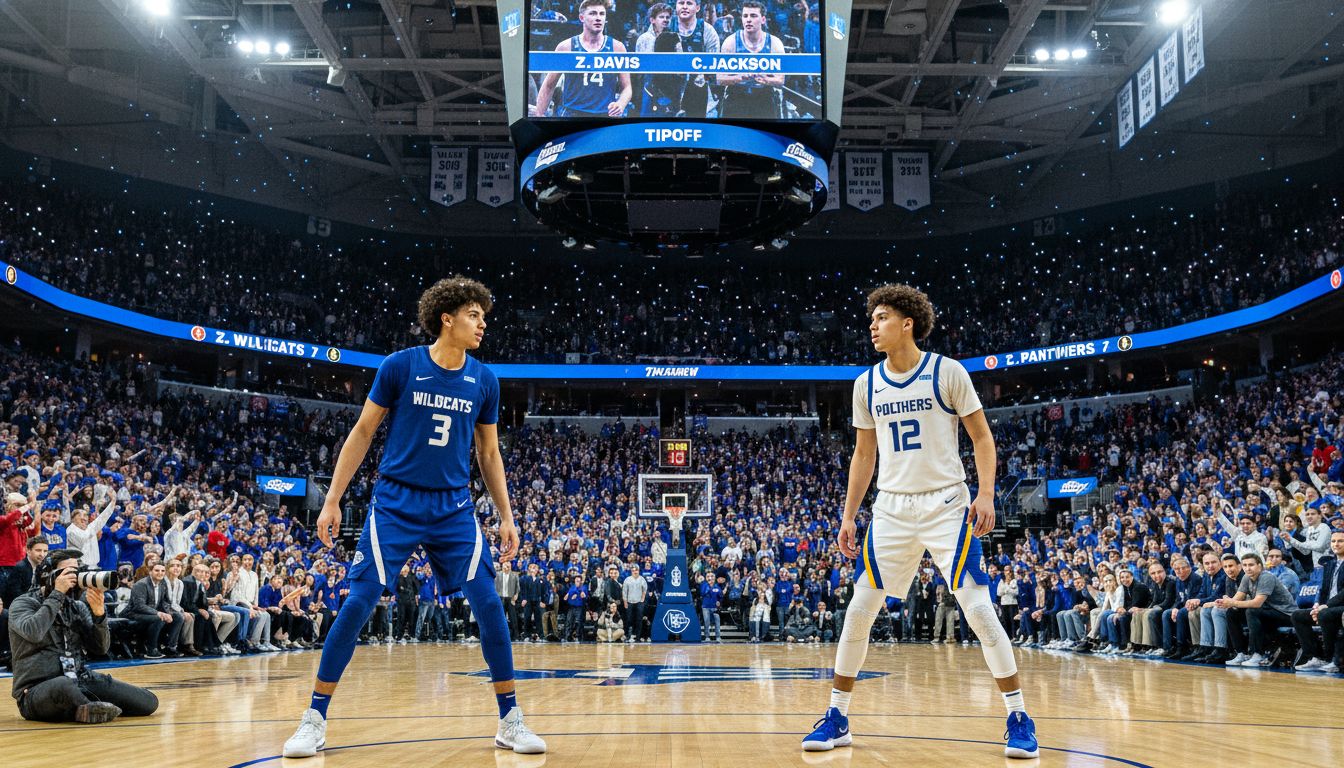
If you follow college hoops long enough from a place like Spokane, you develop a soft spot for games that feel bigger than the standings column says they are. Saturday in Lawrence is one of those nights. On paper, it’s just Kansas vs. BYU in the heart of Big 12 country. In reality, it’s the closest thing the NBA draft world gets to a Super Bowl: Darryn Peterson against AJ Dybantsa, two freshmen with games loud enough to make even tanking NBA teams sit up straight. We’ve seen hyped prospect matchups before, but this one carries a different kind of tension, because no one can quite agree who should be holding the No. 1 spot.
Ask ten scouts which order they’d rank Peterson, Dybantsa, and Duke star Cameron Boozer, and you’ll get at least four different answers and a couple of long pauses. This draft cycle doesn’t have a clear-cut Victor Wembanyama-style outlier; instead, it has a three-way argument. That’s fun for those of us who just like good basketball, and a little nerve‑wracking for the front offices whose jobs might hinge on choosing correctly. Peterson and Dybantsa were neck‑and‑neck in the high school rankings, with 247Sports bumping Peterson to No. 1 last spring after Dybantsa had held the top slot for a long stretch. Since then, both players have validated the hype in different ways, and both have raised real questions that this game will throw into sharp relief.
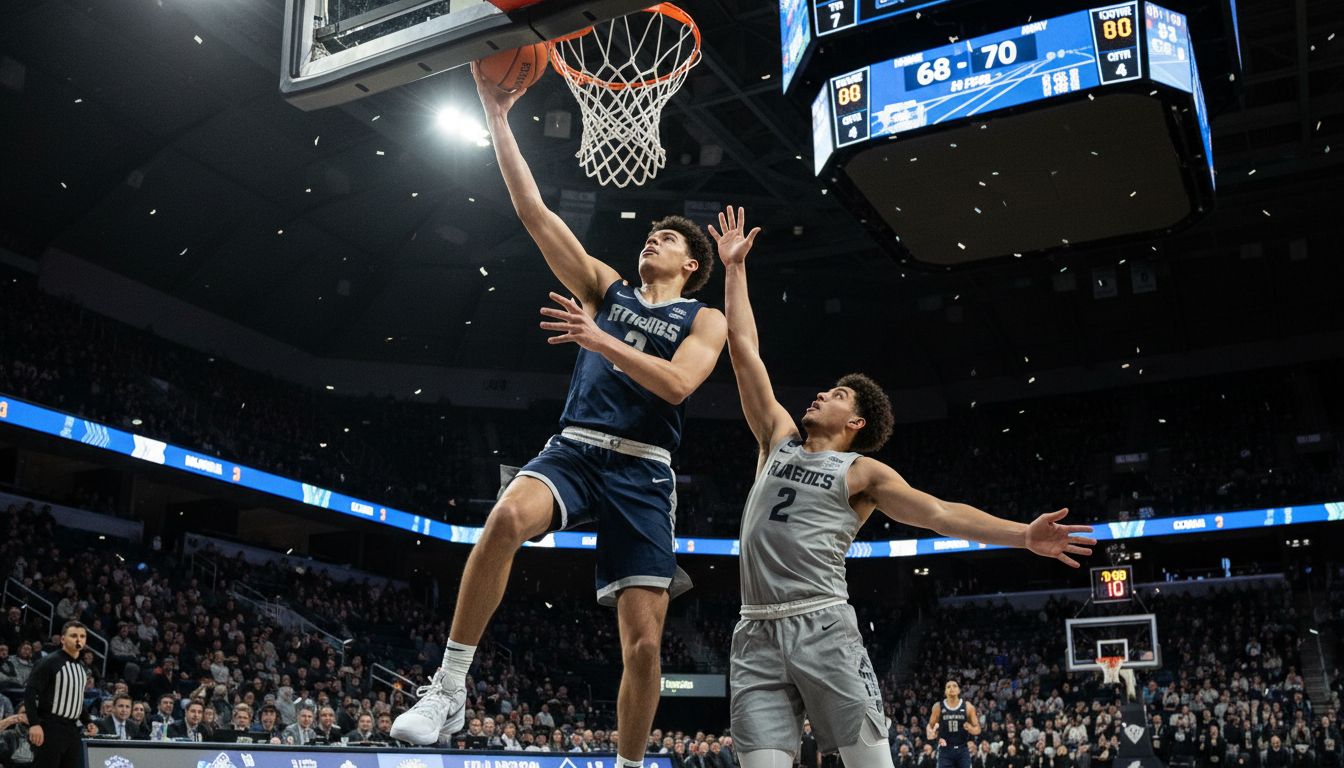
Start with Peterson, the player scouts describe with that dangerous phrase, “one of the greatest guard prospects of his generation.” At Kansas, whenever he’s actually been healthy enough to play, he’s looked the part. His shot‑making has jumped a level since high school: tough pull‑ups, off‑balance threes, shots off pin‑downs that most freshmen are still rehearsing in empty gyms, he’s hitting them in live bullets. He’s a true primary initiator, the kind of guard you can hand the ball to, clear a side, and trust to create the first crack in a defense. Kansas has also used him off the ball, where his improved jumper lets him jog defenders through screens and punish any daylight.
The catch, and it’s a big one, is that Peterson has already missed half of Kansas’s games with a hamstring issue and then an ankle sprain. When we talk about ceilings and floors, availability is the boring word that separates the hopeful from the practical. Plenty of evaluators will tell you they still haven’t seen Peterson with his full explosiveness this season, which is both exciting and a little unsettling. If he’s this good at 80 percent, what does 100 percent look like? And if 100 percent of Peterson is something you only see in short bursts because the injuries never quite go away, how early in the draft are you willing to stake your franchise on that?
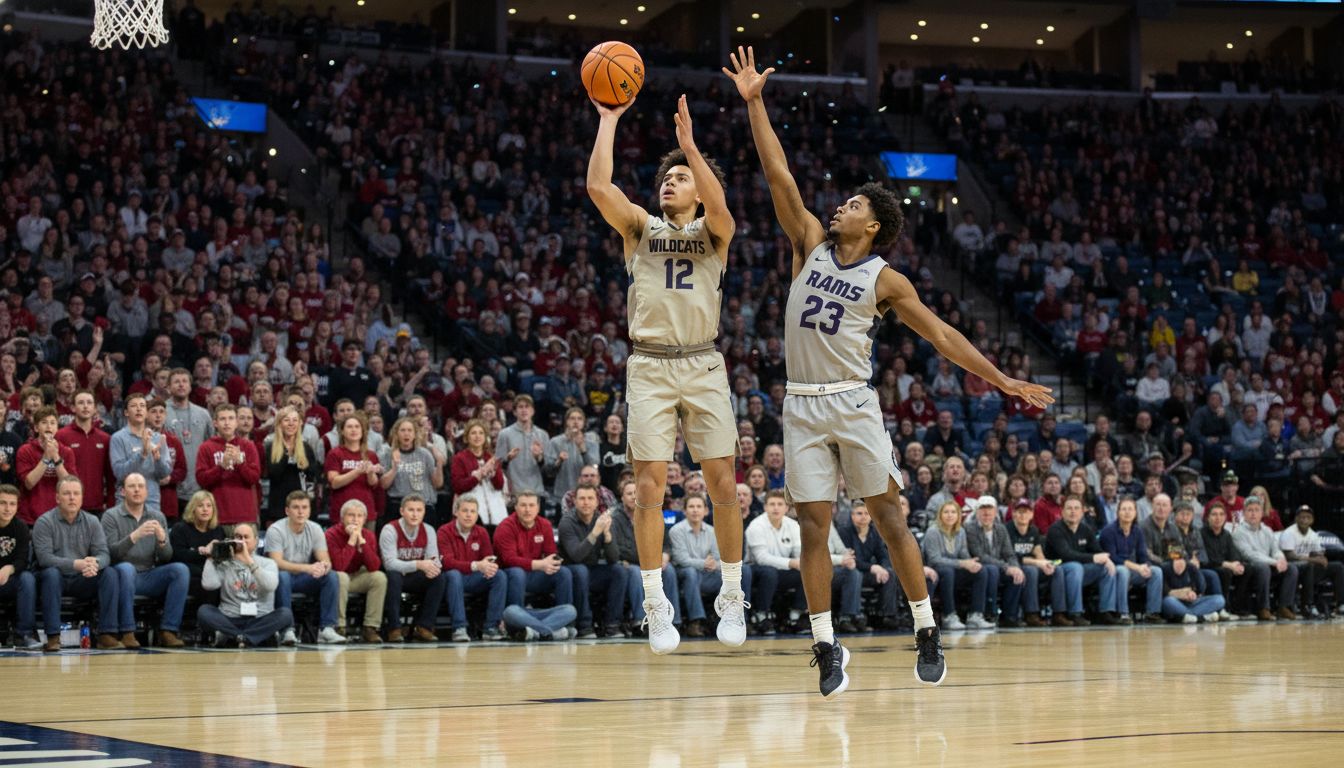
Dybantsa, on the other hand, brings a different kind of gamble. Physically, he’s the prototype wing: position size, long arms, bounce, and that elastic body control that lets big wings slither into gaps where normal humans just sort of collide and reset. His bread‑and‑butter at BYU has been the midrange, where he specializes in getting to his spots, rising up, and shooting over the top like he’s at the park playing against shorter cousins. Last year in high school, his game plateaued and his focus slipped, more show than substance, more playing to the cameras than to the scoreboard. This season, under Kevin Young, the switch has clearly flipped: Dybantsa is locked in, playing through contact instead of just selling it, and thriving in a spaced‑out system that gives him plenty of room to attack.
NBA teams love the idea of this version of Dybantsa, but they’re already gaming out the next context. Right now, BYU’s offense is tilted toward him, the way small‑conference programs often tilt things toward their stars, and he’s got the freedom to explore the studio space. In the NBA, he’s almost certainly a three, maybe the second or third option depending on where he lands. How does his decision‑making look when he’s not the sun in the middle of the solar system but just one of the planets? And can the jumper stretch consistently to the three‑point line, or does that midrange comfort zone become a defensive invitation at the next level?
Hovering over all of this is Cameron Boozer at Duke, the steady drumbeat in a draft class full of cymbal crashes. Where Peterson and Dybantsa offer dizzying upside with real bust scenarios, Boozer is the high floor everyone keeps mentioning in hushed tones. He may not have quite the same nuclear ceiling, but it’s hard to sketch out a realistic NBA where he’s not a productive, winning player. For decision‑makers, that’s both reassuring and maddening: pick the safe All‑Star‑adjacent big, or swing for the fences with the guard or wing who might change your franchise’s trajectory—or your own employment status. More than once this season, executives have admitted they’re terrified of being the team that passes on Peterson or Dybantsa and watches one of them become the league’s next nightmare matchup.
If this all feels familiar, it’s because college hoops has given us this script before, just with different names on the marquee. Cooper Flagg vs. VJ Edgecombe in the NCAA Tournament, Paolo Banchero vs. Chet Holmgren in a November classic, Markelle Fultz and Lonzo Ball dueling in the Pac‑12, and way back to Anthony Davis, Michael Kidd‑Gilchrist, and Bradley Beal trading punches in SEC country. These games become shorthand in draft rooms later, a kind of shared film‑study memory everyone can reference: “Remember how Banchero handled Gonzaga’s length?” or “Remember Fultz’s numbers in that blowout?” Sometimes the head‑to‑head tips the scales; sometimes it just confirms what teams already believed. And once in a while—Kyrie Irving against Derrick Williams, anyone?—it throws everyone for a loop.
Saturday’s matchup fits squarely into that lineage, but it also reflects where the sport is now. The talent is spread more widely, the paths more varied, and the separation between the so‑called blue bloods and everyone else is thinner than it used to be. From a Gonzaga guy’s vantage point, it’s hard not to see echoes of how small‑market NBA teams, and non‑traditional college powers, have to live on these margins of evaluation. You don’t get to whiff on your big swings; you have to know not just who the best prospect is, but who is most likely to thrive in your particular ecosystem. Peterson vs. Dybantsa isn’t just a spectacle, it’s a live‑action case study in that question.
So what should fans watch for, beyond the obvious box‑score arms race? With Peterson, look at how he creates advantages: is he bending the defense with the dribble, manipulating help, and forcing rotations the way a true primary has to? Do his legs look fresh in the second half, or does the recent injury history show up in his burst and lift? With Dybantsa, pay attention to the reads—when Kansas loads up in the gaps, does he trust the pass or force contested twos? And for both, watch how they respond when the other guy hits a hot stretch; how a star handles another star across from him is often more revealing than the highlight package.
By the time the lottery balls finish bouncing in May, this game in Lawrence will be one of the data points front offices circle, replay, and argue about. It won’t decide the draft on its own—no single 40‑minute sample should—but it will color how everyone remembers this class. For most of us, though, it’s simpler: it’s a chance to see two elite young players who have been trading places on rankings boards for years finally share the same floor with real stakes attached. In an era where discourse can get louder than the games themselves, it’s nice when the ball actually goes up and the players get to make the argument for us. Somewhere out there, a fan base is going to spend the next decade either grateful their team won this particular coin flip—or wondering how in the world they managed to call tails when the talent said heads.