Nexus of Truth

The article examines the rare feat of entering February with two undefeated men’s college basketball teams—Arizona and Miami (Ohio)—and situates their runs…

Two Unbeatens in February: Why Arizona and Miami Matter in a Sport That Still Bows to 1976

The article examines the rare feat of entering February with two undefeated men’s college basketball teams—Arizona and Miami (Ohio)—and situates their runs within the larger history of unbeaten seasons, especially Indiana’s 1976 perfection. It contrasts Arizona’s dominant, power‑conference résumé with Miami’s high‑scoring, close‑game volatility, and draws on past examples like Gonzaga, Baylor, Wichita State, and others to show how difficult it is to stay perfect through March. Written from a Bloomington‑based perspective, it treats the 1976 Hoosiers as the enduring benchmark while emphasizing how Arizona and Miami have revitalized regular‑season interest and illustrated different stylistic paths to national relevance.

Wichita State Shockers60%

Bias Analysis

The article is broadly neutral, using Arizona and Miami as case studies to explore how rare undefeated runs are while anchoring the narrative in the historically significant 1976 Indiana season.

Regional nostalgia bias:The narrative repeatedly references Indiana, Assembly Hall, and the 1976 Hoosiers as the central benchmark for perfection, subtly privileging a Midwestern and Big Ten lens over other regions and traditions.(Score: 5)
Power-conference respect bias:While praising Miami’s run, the article implicitly validates Arizona’s accomplishments more fully because of its stronger schedule and power-conference status, suggesting that tougher leagues confer greater legitimacy.(Score: 4)
Traditionalist bias:There is a preference for historical continuity, road tests, and pre‑realignment stability, which frames modern changes like conference shuffling and NIL as noise around the "real" heart of the game.(Score: 4)
Two Unbeatens in February: Why Arizona and Miami Matter in a Sport That Still Bows to 1976

Walk into Assembly Hall on a gray February afternoon, look up at the banners, and you’re reminded that perfection in college basketball is not a theory but a memory: 1975–76, Indiana, 32–0. In nearly half a century since, the sport has grown louder, faster, more commercial, and far less forgiving to anyone dreaming of an undefeated season. That’s why this particular February feels almost old‑fashioned, in the best way, with Arizona and Miami University of Ohio both still unblemished deep into the calendar. One is a desert giant bludgeoning high‑majors, the other a mid‑major dancing on a knife’s edge in the MAC, but together they’ve given this season the rarest of subplots. For those of us in Indiana, where the bar for perfection is permanently set by that 1976 team, their parallel runs are a reminder of just how hard it is to live in that kind of air.
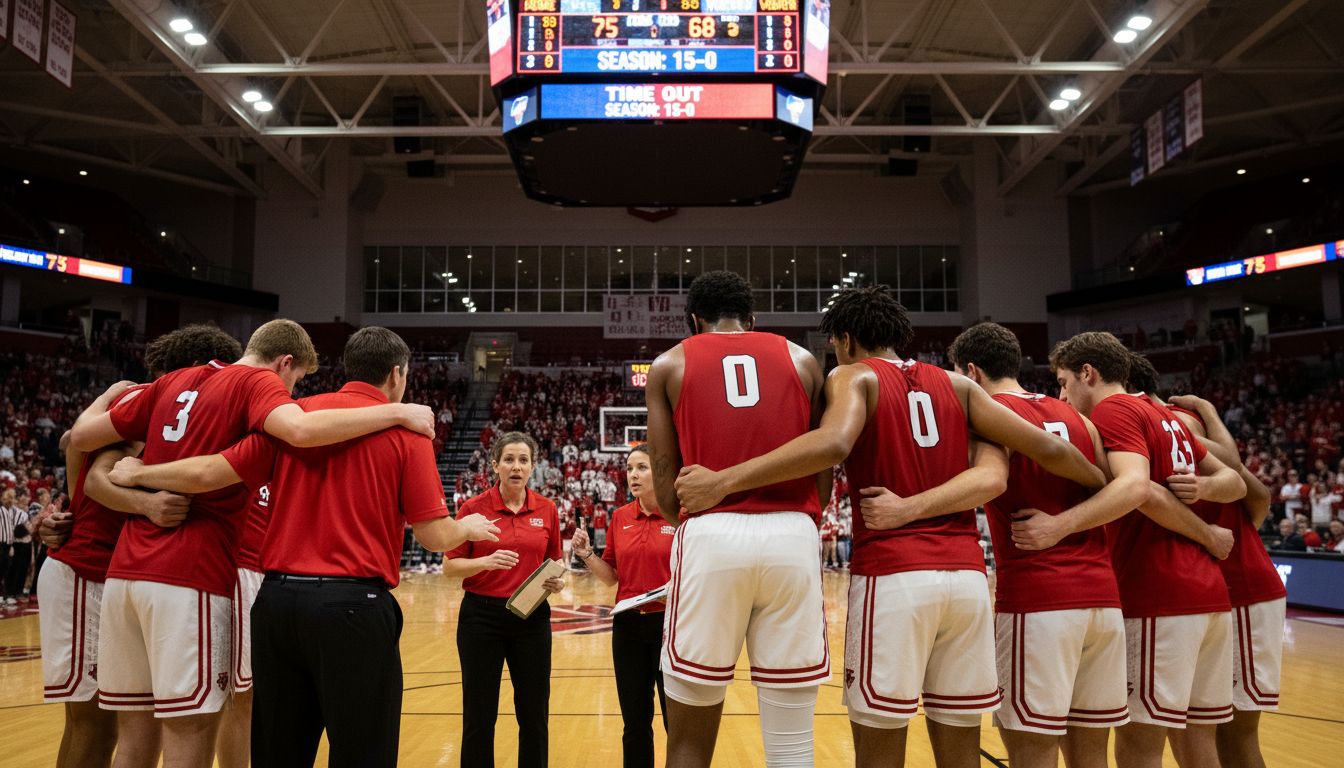
Start with Arizona, a program that has worn the "national power" label for decades but is now flirting with something more imposing: inevitability. From the moment the Wildcats opened the season by taking down defending champion Florida 93–87, they’ve played like a team convinced it can walk into any building and leave with a win. Freshman Koa Peat’s debut in that game already lives in the realm of statistics you double‑check, the sort of first impression that turns a good season into a story. Since then, Arizona has rattled off 21 more wins, sits at 22–0, and owns 10 Quad 1 victories, the most in the country, while pounding opponents by an average of 21 points. In an era when analytics rule and nonconference schedules are scrutinized like tax returns, that résumé doesn’t whisper "contender"; it practically files the paperwork for a No. 1 seed in ink.

Two Unbeatens in February: Why Arizona and Miami Matter in a Sport That Still Bows to 1976

The most impressive part of Arizona’s run is where it’s happened as much as how. They’ve gone to UConn and won, to Alabama and won, to BYU and won—true road tests, not made‑for‑television neutral‑site showcases that feel more like conventions than competitions. For a Big Ten lifer who still believes in the value of a bruising January night in West Lafayette or Madison, that willingness to travel and take real punches matters. We can debate efficiency margins and adjusted tempos all day, but there’s something reassuringly old‑school about a team that will take its chances in someone else’s building. If Arizona extends this streak through a Big 12 grind and into March, it will have done it the hard way, which is the only way that’s ever really counted.

Then there is Miami, 1,545 miles and about three layers of national spotlight away from Tucson, reminding everyone that mid‑majors still have a place in this sport’s imagination. While Arizona is running opponents off the floor, Miami seems intent on raising its fans’ blood pressure one possession at a time. The RedHawks, now 23–0 with the longest winning streak in MAC history, have won four of their last five league games by six points or fewer. KenPom’s “Luck” metric has them sitting eighth nationally, a polite way of saying they’ve been walking the tightrope and somehow haven’t slipped yet. From a neutral vantage point, it’s less about whether the math approves and more about the fact that they keep rewriting what we thought was possible for a program with modest resources and little recent national attention.

Two Unbeatens in February: Why Arizona and Miami Matter in a Sport That Still Bows to 1976

If Arizona’s dominance is about control, Miami’s charm lies in volatility. The RedHawks average 92.8 points per game, third‑best in the country, and they’ve scored at least 70 in every victory this season, landing them in rare statistical company. Only the 2019–21 Gonzaga teams and the 1998–99 Duke group have previously strung together 23 or more wins while clearing 70 points every time, and all of those juggernauts reached the national title game. Miami is not built like those bluebloods—its strength of schedule is far weaker, and the selection committee is unlikely to ignore that—but the pattern is unmistakable: when they win, they do it with a kind of joyful offensive insistence. For fans, it’s a reminder that beauty in this game doesn’t always come with a five‑star roster or a power‑conference logo; sometimes it’s a Tuesday in Buffalo decided by a single possession.

Historically, having even one team reach February without a loss is a gift; having two boundary‑tests the word "ordinary." Since the early 1990s, there have been only a handful of seasons where multiple teams carried perfect records into this month, and most of those runs ended with a thud rather than a coronation. The 2020–21 COVID season gave us Gonzaga, Baylor, and Drake all unbeaten into February, though the schedule chaos of that winter came with an asterisk the size of a center court logo. Wichita State’s 2013–14 campaign, a pristine march into the NCAA Tournament that ended in a classic against Kentucky, still stands as the high‑water mark for a modern mid‑major unbeaten, particularly given the Shockers’ far stronger schedule than what Miami faces today. Threaded through all of these examples is the stubborn reality that even greatness usually bends before March is done; since Indiana in 1976, no men’s Division I team has managed to stay perfect and cut down the final nets.

Two Unbeatens in February: Why Arizona and Miami Matter in a Sport That Still Bows to 1976

That Hoosier benchmark hovers over every discussion of perfection, even when the current protagonists come from other regions and other leagues. Arizona, for all its prowess, still has a gantlet ahead—Oklahoma State at home, then a trip to Kansas that will test its poise as much as its playbook. Miami, for its part, faces its statistically toughest remaining game at Marshall in the MAC/Sun Belt Challenge, one more chance for the numbers to catch up with the narrative. From my seat in Bloomington, it’s less about guarding a record than appreciating how far a team has to travel, metaphorically and literally, to even enter the conversation with that ’76 squad. You don’t need to be a partisan of any particular program to recognize that what Arizona and Miami are doing is rare enough to be savored, regardless of how and when the streaks end.

For all the metrics and historical comparisons, the real value of seasons like this lies in how they change the way we watch. Suddenly a mid‑February game in Oxford or a late‑night tip in Tucson becomes appointment viewing, the kind of contest you plan dinner around instead of stumbling upon while channel‑surfing. Fans who normally check in only when brackets are announced find themselves scanning scores in early February, wondering if the zero is still intact. That shared curiosity is part of what made 1976 so enduring here in Indiana—the sense that everyone, from the die‑hards in the upper deck to the casual fans listening on the radio, understood they were tracking something that might not come around again. Arizona and Miami won’t replicate that feat, not in context or in perfection, but they’ve revived that old familiar feeling that the regular season can still deliver a sense of occasion.

There’s also a quiet lesson tucked inside these unbeaten runs about style and substance. Arizona has thrived despite not leaning into the 3‑point barrage that defines so much of modern basketball, relying instead on size, physicality, and efficient two‑point offense. Miami, conversely, is a testament to pace and space, to the idea that a program without elite pedigree can still dictate terms through tempo and creativity. For a sport often framed as a binary between bluebloods and everyone else, their coexistence at the top of the standings is a modest rebuttal: there are many paths to relevance, and none require you to abandon who you are. In that way, these seasons echo something every Hoosier gym rat learns early—whether you’re playing in Assembly Hall or a small‑town fieldhouse, the game rewards conviction as much as talent.

As we inch closer to March, the most sensible prediction is also the dullest: both Arizona and Miami will probably pick up a loss or two, settle into seed lines that reflect their full body of work, and become storylines rather than centerpieces in a crowded bracket. But that shouldn’t diminish what this month has already offered. In a landscape crowded with transfer‑portal headlines, NIL debates, and conference realignment anxiety, the simple drama of two teams refusing to lose has cut through the noise. For those of us who still measure winters by how the ball bounces from Madison to Bloomington to West Lafayette, seasons like this affirm that the heart of college basketball remains on the floor, not in the boardroom. Whether you’re in Tucson, Oxford, or somewhere along State Road 37 driving toward the glow of Assembly Hall, this year’s twin unbeatens have made the long march to March feel just a little bit magical again.

Key Facts

  • Arizona and Miami (Ohio) both entered February undefeated, a rare occurrence in men’s Division I basketball.
  • Arizona started 22–0, with 10 Quad 1 wins and an average margin of victory of 21 points.
  • Miami (Ohio) is 23–0 with the longest win streak in MAC history, winning many close games and ranking highly in KenPom’s Luck metric.
  • Miami averages 92.8 points per game and has scored at least 70 points in every win, joining select company with recent Gonzaga teams and 1998–99 Duke.
  • Multiple seasons since the early 1990s have featured more than one unbeaten team in February, including 2020–21 with Gonzaga, Baylor, and Drake.
  • No men’s Division I team has finished a season undefeated and won the national title since Indiana’s 32–0 run in 1975–76.
  • Arizona’s schedule includes notable road wins at UConn, Alabama, and BYU, and upcoming tests against Oklahoma State and Kansas.
  • Miami faces its toughest remaining regular‑season test at Marshall in the MAC/Sun Belt Challenge.
  • Power‑conference and mid‑major unbeatens historically face different levels of skepticism and validation from metrics and the NCAA selection committee.
  • The article argues that these twin unbeaten runs enhance regular‑season engagement and showcase multiple viable playing styles in modern college basketball.

Sources (1)

Back to Articles