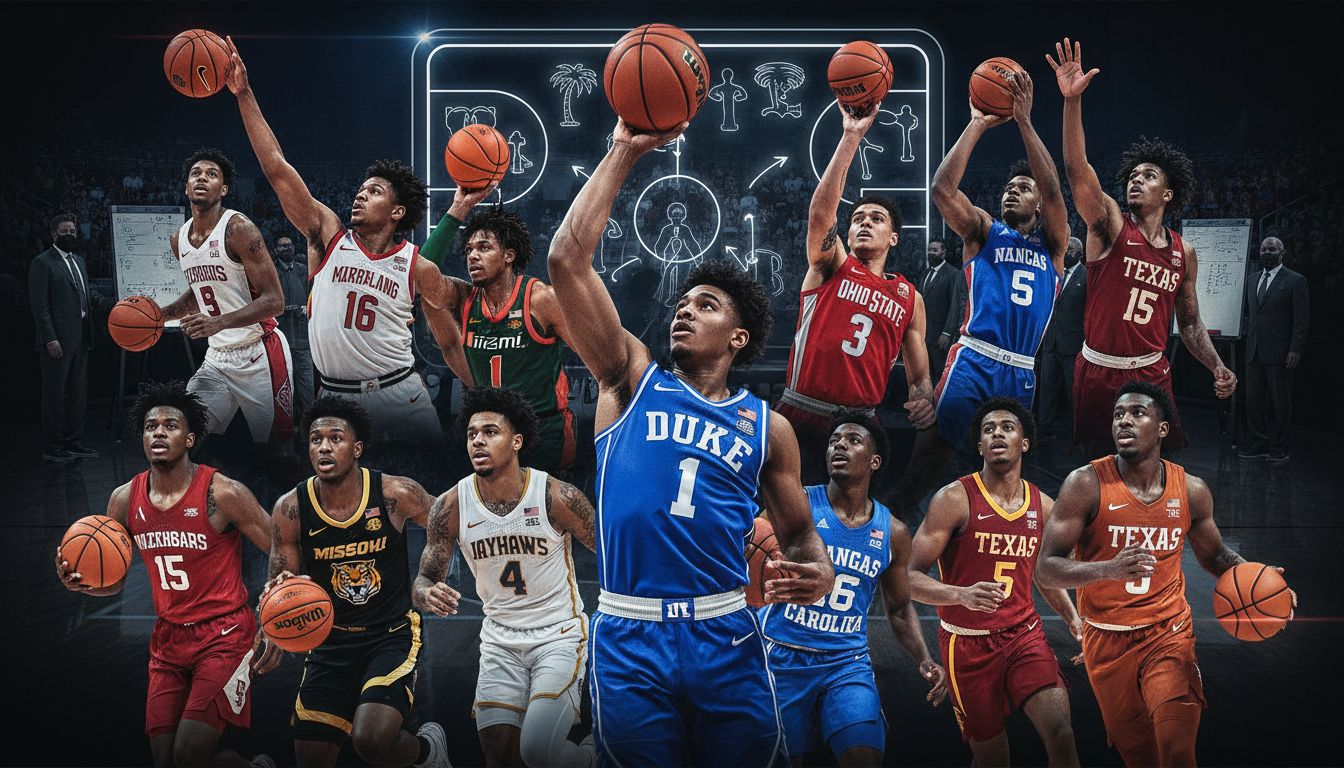
The Class of 2026 isn’t just another recruiting cycle; it’s an arms race, and the bluebloods came loaded. Nineteen five‑star prospects sit atop the SC Next 100, and the way they chose their schools tells you who has a real plan and who’s just selling jerseys and hashtags. Strip away the hype videos and commitment edits and you see something simple: some staffs are recruiting to an identity, and some are just collecting toys. That’s the difference between a class that wins you March and a class that just fills your Instagram feed. Let’s walk through the headliners and what their decisions really say about the programs they chose.
Start with Duke, because of course you do. Jon Scheyer lands Cameron Williams, Deron Rippey Jr. and Bryson Howard and suddenly he’s staring at a third straight No. 1 class. That’s not just talent hoarding; that’s roster engineering with pressure baked in. Williams at 6‑11 with a real three‑ball is the natural heir to Cameron Boozer, but he’s not a Flagg‑style system on his own – he’s a two‑way worker who’ll be judged on whether he can anchor winning possessions, not mixtapes. Rippey Jr. walks into a crowded point guard room with Caleb Foster and Cayden Boozer; that’s either a three‑headed monster or a chemistry test Scheyer better ace. Meanwhile, Howard’s elite shooting is the kind of skill that forces its way onto the floor, no matter who stays or goes to the draft.
Duke’s situation raises the question every power program pretends not to hear: how many stars can share one ball before someone hits the portal. This is where accountability becomes real – not the buzzword you drop on media day. Can Scheyer define roles early, live with egos, and still demand defense from three former high‑school alphas in the same backcourt rotation. If he pulls it off, that’s culture, not recruiting rankings, doing the heavy lifting. If he doesn’t, this class becomes another reminder that depth without clarity is just chaos in nicer sneakers.
Arkansas under John Calipari is playing a familiar song, just with a different logo on the polo. Jordan Smith, a violent two‑way guard who’s been a target since his freshman year, plus in‑state finisher JaShawn "JJ" Andrews gives the Razorbacks a puncher’s chance at the top class in the country. Smith is physically college‑ready and wired to win; Andrews brings size, straight‑line aggression and enough shooting to keep you honest. Calipari’s challenge in Fayetteville is the same one he faced in Lexington: turn lottery projections into defensive commitment and shot discipline. If Darius Acuff Jr. and Meleek Thomas head to the league as expected, Smith walks into immediate opportunity – and no excuses.
Missouri, of all programs, might be the sneakiest winner here. Dennis Gates didn’t just land a volume scorer in Jason Crowe; he followed it by locking up power forward Toni Bryant, giving the Tigers the only 2026 class with two five‑star prospects so far. Crowe is a 23‑points‑per‑game EYBL killer who’s going to own the ball late in games, and Bryant is a vertical threat who runs, rebounds and is starting to stretch the floor. That’s a clear identity: pace, pressure, and letting your best guard decide outcomes. For a program that doesn’t live on the blueblood tier, that’s how you build something sustainable – by getting a star who wants the shot and a big who’s happy doing the dirty work and cashing lobs.
Maryland, Miami and Ohio State each landed the kind of frontcourt or jumbo‑wing piece that can reset a program’s ceiling if the staff is honest about how to use them. Babatunde Oladotun, once the No. 1 player in 2027 before reclassifying, gives Maryland a 16‑year‑old mismatch with real skill and defensive range; pair him with Kaden House and scorers like Darius Adams, and you’ve got a nucleus that should age into something dangerous, if they’re allowed to grow through mistakes. Miami grabbed in‑state banger Caleb Gaskins, who dominated Peach Jam on the glass and gives new coach Jai Lucas a physical foundation instead of just shiny guards. In Columbus, Anthony Thompson’s size, 7‑4 wingspan and 40% three‑point stroke make him the kind of guy you build actions around, not just “fit in” next to veterans. All three programs showed some discipline: get one centerpiece, then build the class around what he actually does well.
North Carolina and Kansas took a more traditional route: find the point guard who can live with expectations and still attack. Dylan Mingo, once thought to be leaning to Penn State or Baylor, ends up in Chapel Hill with size, length and a downhill mentality that will pair well with Derek Dixon. UNC isn’t asking him to be a savior; they’re asking him to win possessions at the point of attack and on the glass, and that’s a grown‑man assignment if he embraces it. Kansas, meanwhile, flips the script with Taylen Kinney, a scoring point guard stepping into the vacancy that will likely be left by Darryn Peterson. Kinney is more bucket than pure table‑setter, but Bill Self has made a career out of letting aggressive guards be themselves while still demanding they guard and share the ball – or sit.
USC’s gamble is upside, plain and simple. Adonis Ratliff, a 7‑footer who leapt 76 spots in the rankings, has already flashed nine‑three‑pointer upside in a single game and brings one‑and‑done potential if his body holds up and his motor keeps running. Pair him with his twin Darius and potentially Jacob Cofie, and Eric Musselman could roll out a frontcourt that stretches, switches and still protects the rim. That’s terrifying on paper and tricky in real life; three skilled bigs means someone is going to have to screen, sprint and defend without being the first option. How quickly Ratliff buys into that reality will determine if USC is building a draft highlight reel or a serious March problem.
Texas kept it simple and smart with Austin Goosby, a versatile in‑state scorer whose brother already plays football in Austin. Sean Miller stacked him with shooters Bo Ogden and Joe Sterling, turning the 2026 perimeter into a trio built for spacing and cutting instead of isolation YouTube clips. Goosby isn’t the best pure shooter of the bunch, but he’s the most complete scorer, which means he’ll be the one defenses scheme for. With three senior guards leaving, the Longhorns aren’t promising playing time; they’re guaranteeing responsibility. That’s the kind of situation that exposes who’s in it for development and who just wanted a hat on the table.
If there’s a common thread through this five‑star shuffle, it’s that fit is starting to matter again – at least for the programs that expect to win in March instead of February’s rankings war. Duke and Arkansas are banking on managing crowded rooms of alphas; Missouri and Miami are betting on clearly defined roles; Maryland, Ohio State and USC are chasing ceiling and trusting they can teach the rest. None of that guarantees banners. But when you look back at this class in five years, the successes will belong to the staffs that told their stars the hard truths up front. Talent gets you in the door; toughness, role acceptance and accountability decide who’s still playing when it’s win‑or‑go‑home.