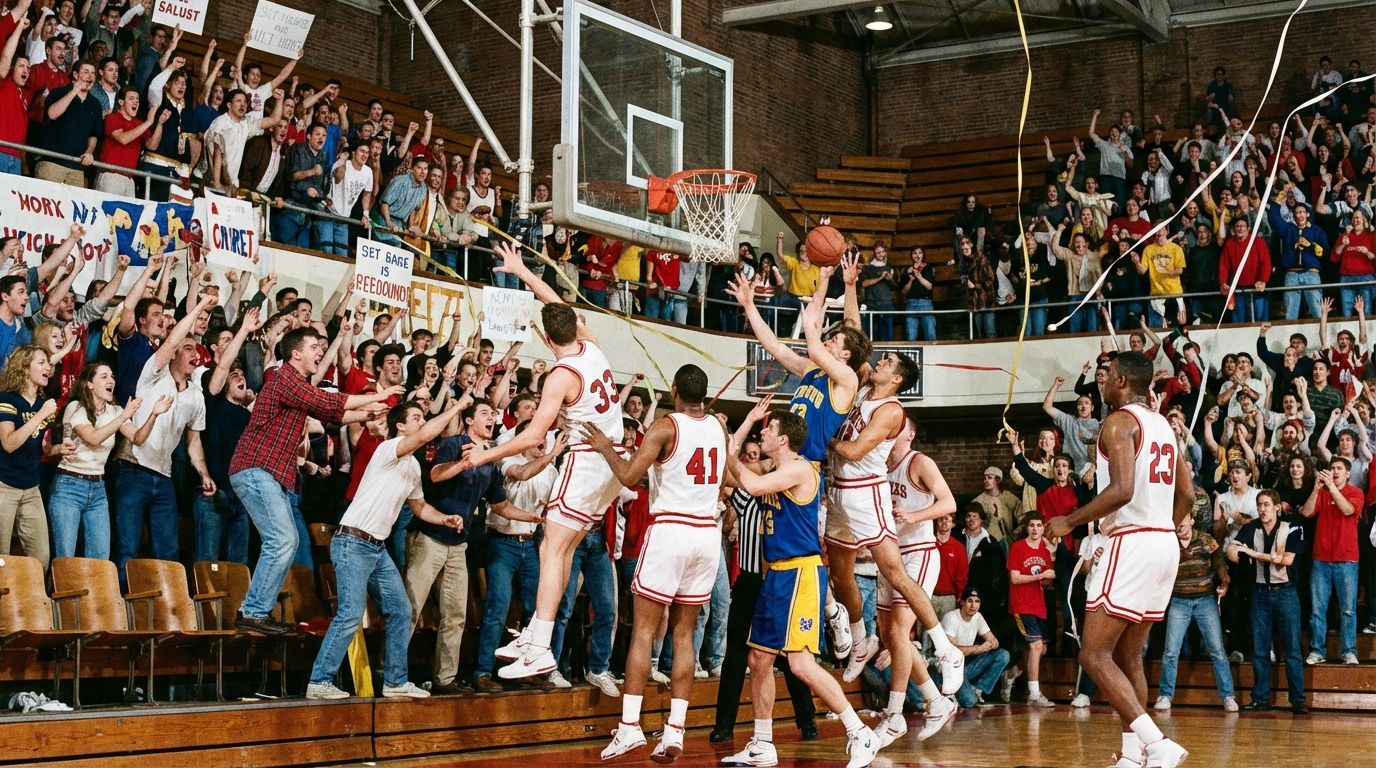
On the coasts of college basketball, far from the television money geysers of the so‑called Power 6, the Coastal Athletic Association is doing something radical in 2026: it’s competing without a safety net. No at‑large cushion, no national darlings, no guaranteed ESPN segments — just 13 programs fighting over one automatic bid and the right to exist on your March Madness bracket for more than five seconds. If you want to understand how power actually works in college sports, you don’t start with the blue bloods; you start with leagues like this, where every efficiency, every blown whistle and every scheduling quirk matters because there is zero margin for error. The CAA has rebranded twice in search of a more accurate (and less colonial) identity, but the power dynamics haven’t changed much: resources flow up, risks flow down, and mid‑majors are left to make a tournament out of scraps. And yet, this is also where the sport is at its purest — where a five‑point margin of victory feels like a luxury item and the conference tournament is less a bracket than a controlled burn.
The league began in 1979 as the ECAC South, a basketball‑only operation for southern schools that later expanded, added more sports, and renamed itself the Colonial Athletic Association in 1985. By 2023, with membership stretching from South Carolina to New England and administrators finally reading the room on 18th‑century branding, it became the Coastal Athletic Association. Name changes are cosmetic; geography, budgets and media contracts are structural, and the CAA sits firmly on the wrong side of the money divide. That divide shows up most clearly in March: for the last three years, the men’s side has produced exactly one ticket to the NCAA Tournament, always via the automatic bid, with the selection committee treating the rest of the league like background noise. You don’t need leaked emails to find systemic bias in college athletics; you just need to look at who gets multiple chances in March and who has to be perfect for three days in a neutral gym.
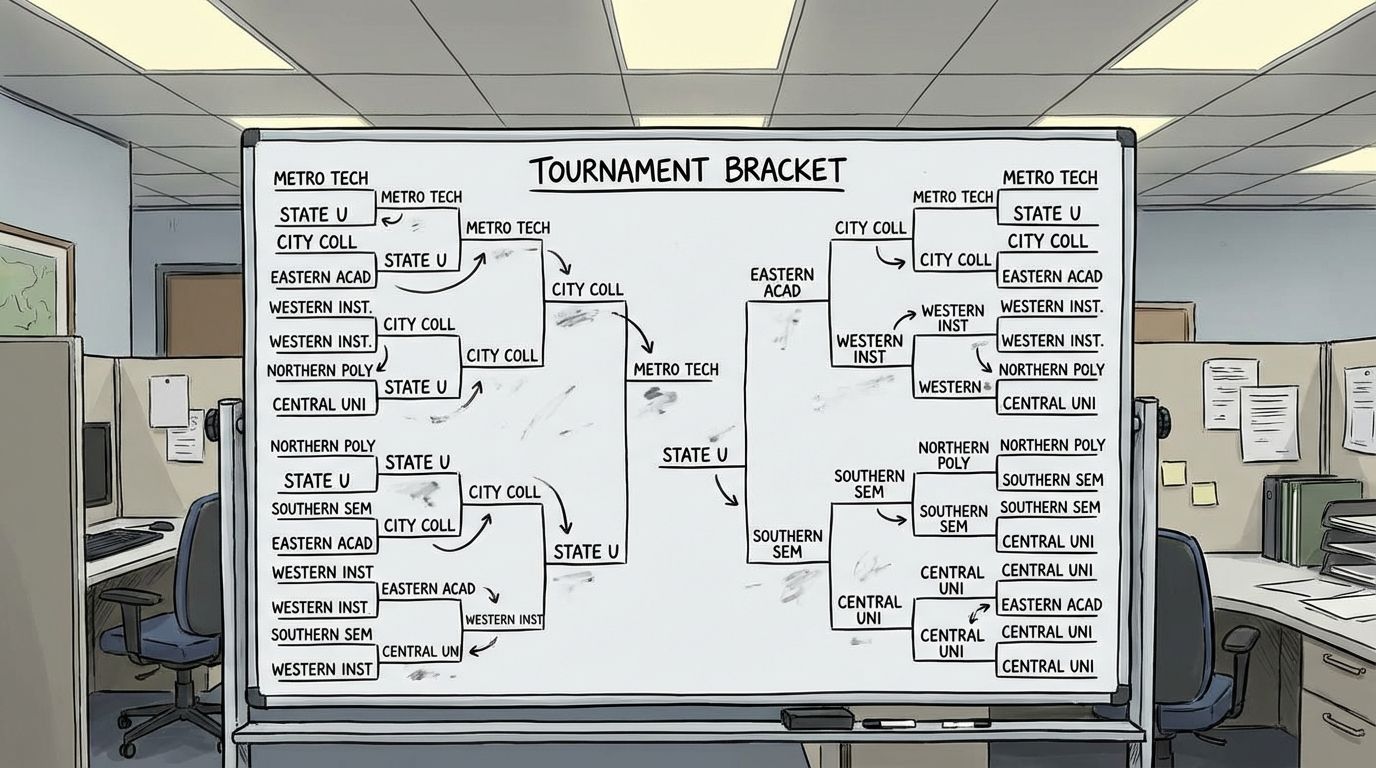
Structurally, the CAA is at least honest about what it is: a 13‑team league where everyone gets a shot, but not an equal one. All 13 teams qualify for the conference tournament, yet the bracket is tiered to reward regular‑season success and protect the top seeds with rest and preparation time. The last two teams in the standings open with a play‑in game; seeds 5 through 11 drop into the second round; the top four sit and wait with double byes until the quarterfinals. The No. 1 seed draws the winner of the 8‑9 matchup, while the 5‑seed is incentivized with a date against the play‑in survivor — a polite way of saying the league knows exactly how much harder life already is at the bottom. It’s a rational system, but it’s also a reminder: in a one‑bid league, the bracket is policy, and policy has winners and losers long before the first tip.
On the men’s side, there is no hegemon, no bully program running up 16‑2 conference records and inflating its NET ranking on a diet of overmatched travel partners. As of Feb. 10, UNC Wilmington sits atop the standings at 9‑2 and leads the CAA in the NET at 99th — a respectable number that might earn you a shrug in the Big Ten and an entire media guide chapter here. Hofstra lurks at 7‑5 and 105th in NET, while College of Charleston sits half a game back of UNCW in the standings but far lower in the metric, at 164th. William & Mary reverses the pattern with a 6‑6 league record but a NET of 119th, the kind of profile that screams, "We’re good enough to scare people, not good enough to save our conference’s reputation." Below them, the story is clustering: Stony Brook, Drexel, Monmouth, Campbell, Hampton, Towson and Elon all swim in the same statistical middle, with NET rankings mostly between 179 and 249 and conference records hovering within a couple of wins of .500.
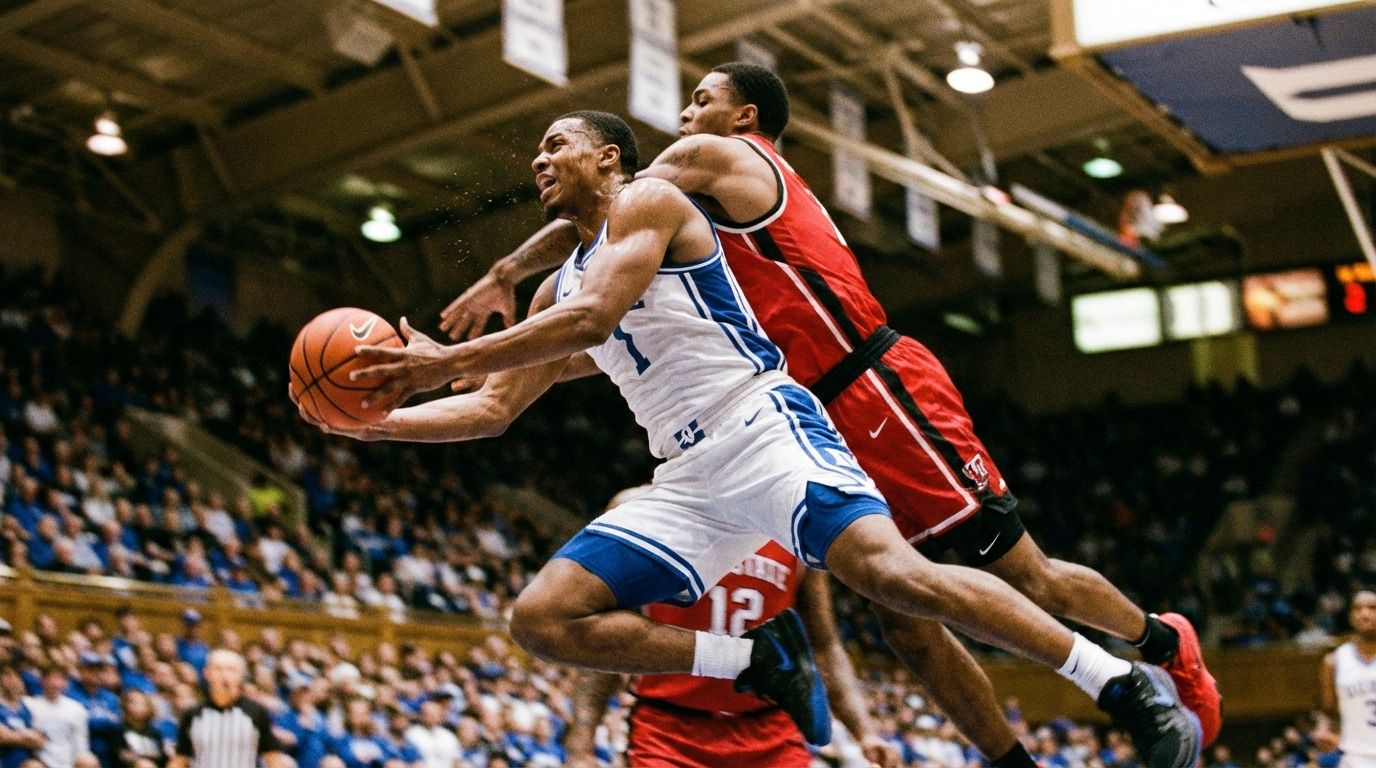
In practical terms, that clustering means this: nobody is getting an at‑large bid, and everybody is dangerous for exactly 40 minutes in March. UNCW’s résumé won’t move a selection committee conditioned to favor bigger logos, but within the league the Seahawks are terrifying precisely because they’re so ordinary on paper. They rebound relentlessly — top‑four in offensive boards, second in defensive rebounds — live at the free‑throw line, and take care of the ball better than anyone else in the CAA. They don’t shoot especially well, and they don’t blow people out; their average margin of victory in conference is under five points, which means every win is essentially an audit that just barely passes. In a fairer system, that profile gets you a mid‑seed and a chance; in this one, it gets you a polite nod and a single ticket with no insurance.
If there is a true entertainment hedge in this league, it’s Hofstra’s offense, which looks less like a mid‑major system and more like a two‑guard startup backed by venture capital in the form of green lights. Senior guard Cruz Davis leads the conference at 21 points per game, with nearly four rebounds and close to five assists, operating as both engine and bailout option. Freshman guard Preston Edmead adds 15.6 points and 4.7 assists, giving the Pride a backcourt that can both create and survive when defenses load up on one side. Hofstra is second in the league in field‑goal attempts but just 10th in percentage, which would be a problem if they weren’t also the CAA’s most dangerous three‑point outfit — top‑two in made threes and attempts, and first in three‑point percentage at an eye‑popping 39.2%. When you rebound like a frontline football program and shoot threes like this, you don’t so much run an offense as you wage a math war, and March tends to reward that kind of insurgency at least once a weekend.
Defensively, Towson carries the league’s one elite metric, boasting a top‑100 unit by KenPom’s unadjusted numbers, even as its conference record sits at a modest 5‑7. This is the mid‑major paradox in microcosm: you can be analytically solid, structurally sound and still lose just enough coin‑flip games to land on the wrong side of the bracket and the NET cut line. Drexel, Monmouth, Campbell and company occupy similar territory, good enough to matter locally but not polished enough to break through the national noise. For them, the CAA tournament isn’t just a path to March; it’s an evaluation report for administrators, donors and, increasingly, NIL collectives deciding where to place their limited bets. In Power 6 leagues, an early exit is a disappointment; here, it can be a budget line item.
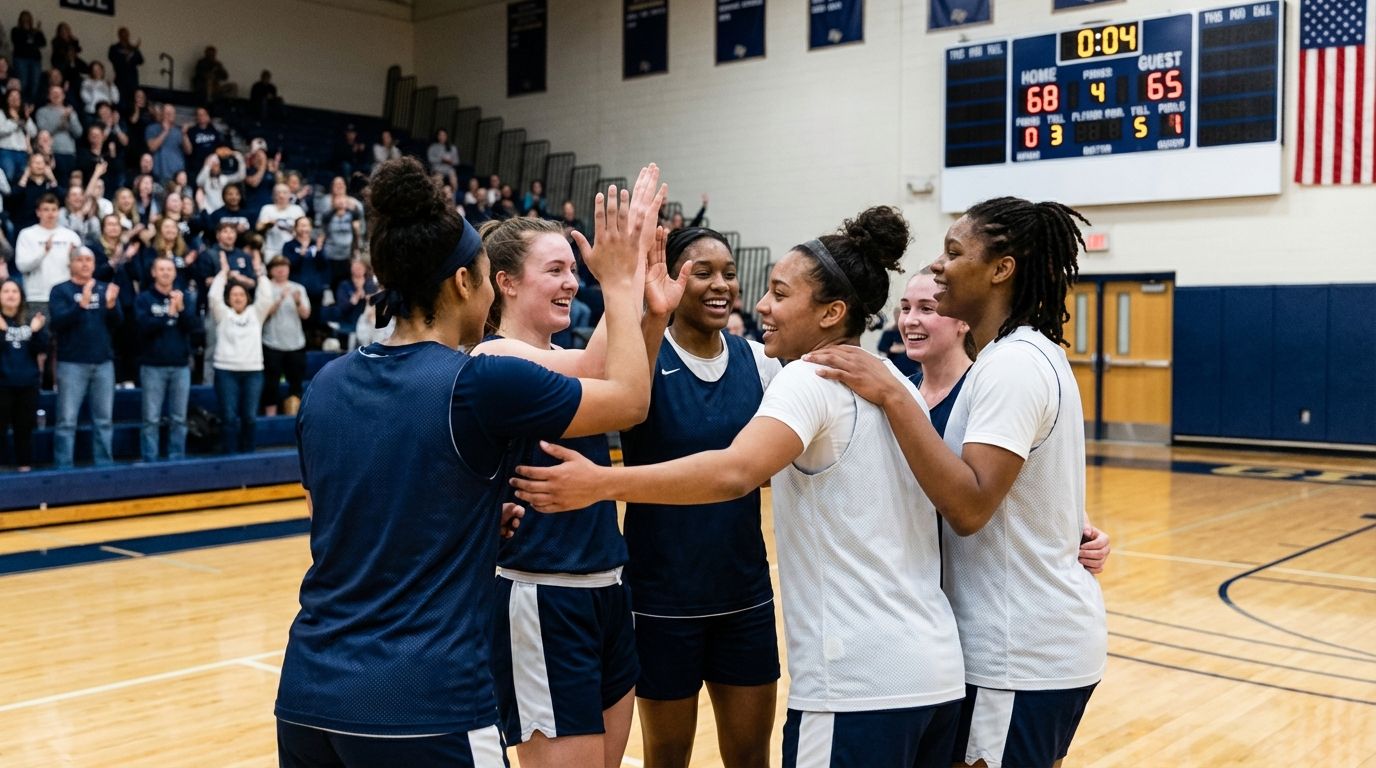
On the women’s side, the picture sharpens around a single, surging program: College of Charleston, 11‑0 in conference and 101st in NET, the only top‑150 NET team in the league. Below the Cougars, the familiar clustering returns: Stony Brook at 8‑2, Monmouth and Campbell at 8‑3, Drexel at 7‑4, then a muddle of Elon, Towson, William & Mary, NC A&T, Hampton, Northeastern, Hofstra and UNCW all cycling between 1‑10 and 6‑5. The national committee will not reward that parity with extra bids, but the internal stakes are enormous — especially for a Charleston team that has built a profile too strong to ignore and still not quite strong enough to be safe. In adjusted offensive efficiency, Charleston sits 88th nationally, with a defense that lags behind but a staggering in‑conference margin of victory of nearly 16 points per game. They lead the CAA in made threes, rank near the top in three‑point percentage and steals, and succeed despite mediocre rebounding, which tells you just how violently they tilt the possession game with pressure and perimeter shooting.
The core of that women’s juggernaut is a trio as compelling as any power‑conference storyline you’ll see in March, even if you won’t hear their names nearly as often. Twin junior guards Taryn and Taylor Barbot run the show: Taryn pours in 19 points per game and still finds time to finish second on the team in rebounds and assists, while Taylor adds 12.5 points and an eye‑popping 6.2 assists, tied for 10th in all of Division I. Junior forward Grace Ezebilo, averaging a modest 6.1 points, quietly leads the entire conference in rebounding and ranks sixth nationally, turning missed shots into second lives. Around them, junior forward Tyja Beans chips in 11.1 points and 4.5 boards, and senior guard Sophia Tougas hits 9.2 points per game while leading the CAA in three‑point percentage at 36.8%, a sniper’s clip in a league still catching up analytically. From a distance, this is just another mid‑major success story; up close, it’s a case study in what happens when a program maximizes every edge it can control in a system rigged to reward the programs that already have plenty.
If you’re looking for corruption in the CAA, you won’t find it in a smoking‑gun document or a wiretap; you’ll find it in the quiet resignation that leagues like this are forever one‑bid, forever background. The players and coaches are doing their part — building efficient offenses, squeezing value out of every possession, scraping for rebounds like they’re meal money — while the larger ecosystem politely applauds and moves on to the next Power 6 drama. This is the soft corruption of indifference, where accountability is inverted: mid‑majors are judged mercilessly on small‑sample tournaments, while selection committees and television partners are almost never asked to justify why the same brands get endless mulligans. The Coastal Athletic Association won’t fix that by itself, but its chaos is a form of protest, however unintentional: when a league is this tightly packed, the bracket stops reflecting reputation and starts reflecting execution. And that’s why the CAA is worth your attention in March — not because it will produce a champion, but because, for a weekend or two, it forces a sport obsessed with hierarchy to live with something dangerously close to fairness.