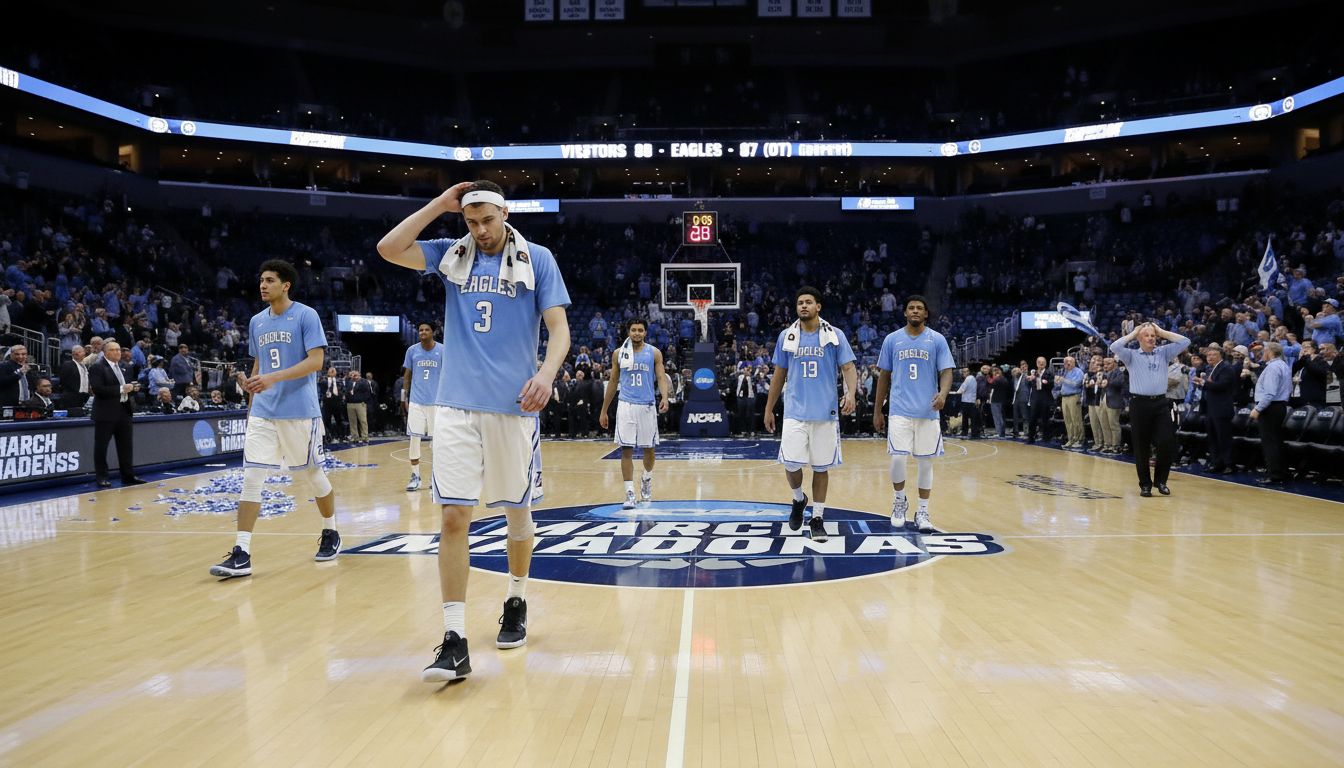
The first full day of the 2026 NCAA Tournament delivered the sport at its rawest: bluebloods coughing up leads, mid-majors proving a point, and one long-suffering program finally getting off the mat. North Carolina’s overtime loss to VCU will sit in Chapel Hill’s memory like a bad dream that doesn’t fade with daylight. Up 19 in the second half, running as they like to run, the Tar Heels looked like a No. 1 seed easing into the bracket. Then the offense froze, the defense sprung leaks, and VCU guard Terrence Hill Jr. kept coming downhill until he’d piled up 34 points and forced overtime. UNC didn’t make a field goal in the extra session and still had a chance at double OT, only to miss two free throws in the final seconds—a fitting, if cruel, end to a season that began with All-American expectations and ended with questions about Hubert Davis’ hold on the wheel.
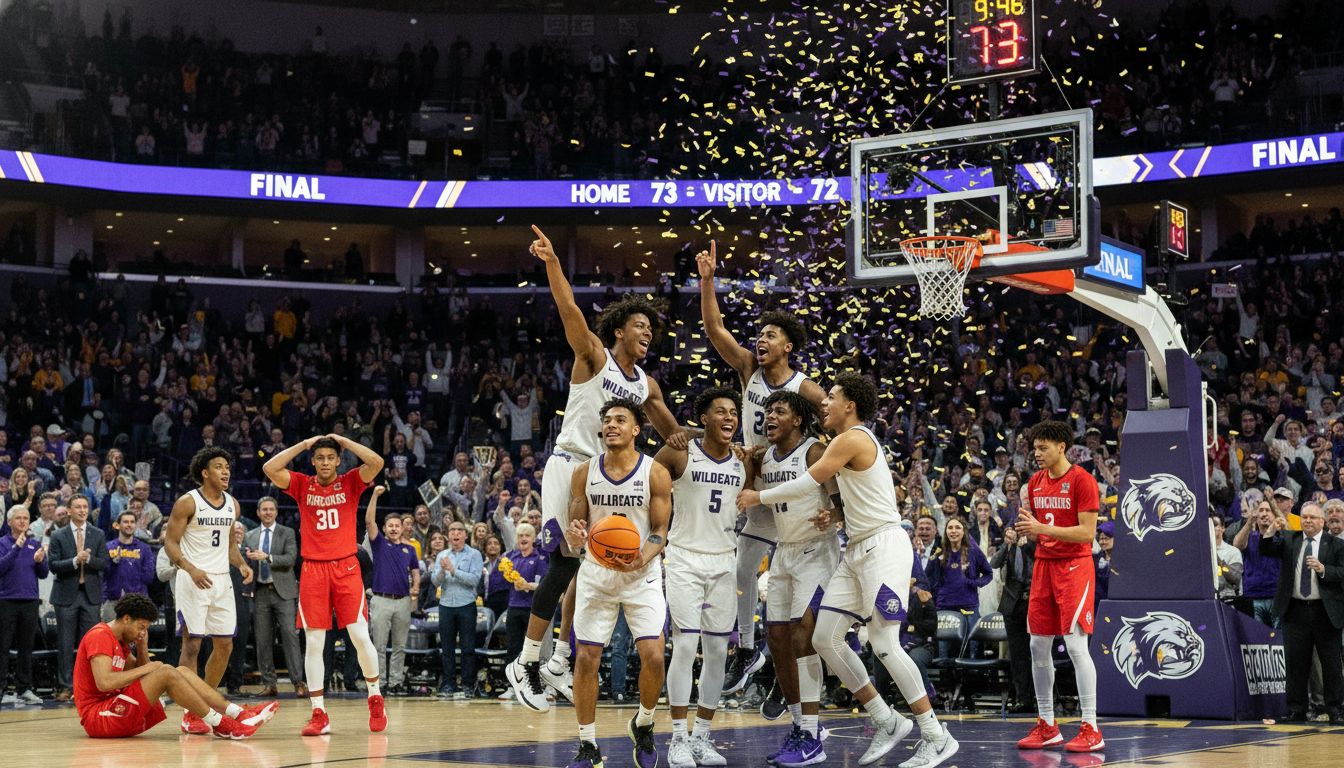
If you follow this sport long enough, you learn the difference between a routine loss and a program-level gut check; North Carolina’s collapse belongs in the latter file. Injuries to Caleb Wilson and Seth Trimble were real, not excuses, but the larger issue is how a veteran team lost all composure when it mattered most. A 26-42 record in Quad 1 games under Davis and a Round of 64 meltdown to an 11-seed is the kind of math athletic directors notice, quietly at first. Coaches will tell you March is a referendum business, and this is the sort of film that gets replayed in corner offices, not just film rooms. The players will move on; the adults in charge now have to decide whether this was a bad night or a sign that the program’s competitive edge has dulled.
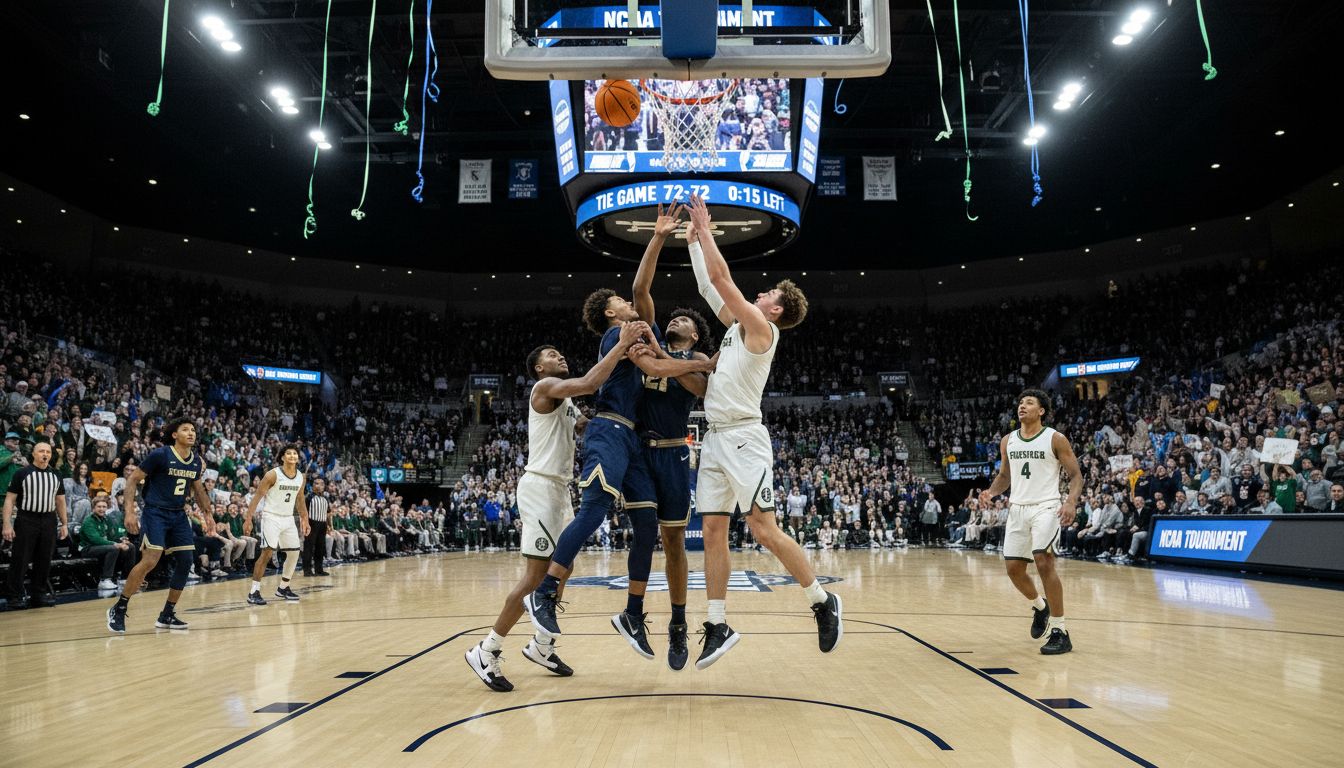
North Carolina wasn’t alone in misery; Wisconsin took its turn on the wrong end of the March slingshot against High Point. The Badgers had the star power and the resume, and for 36 minutes it looked like that would be enough. Then 26-year-old, sixth-year guard Chase Johnston stepped into the spotlight, hit three deep threes that would’ve been out of bounds in some gyms, and capped it with his first two-point bucket of the season for the game-winner. Wisconsin got 49 points from John Blackwell and Nick Boyd and shot well from the arc, but late missed layups and a flipped script—this time they were the ones walked down—sent them home. It’s a reminder that for all the talk about analytics and seeding, March often comes down to who can stay loose and make plays with everything tilting.
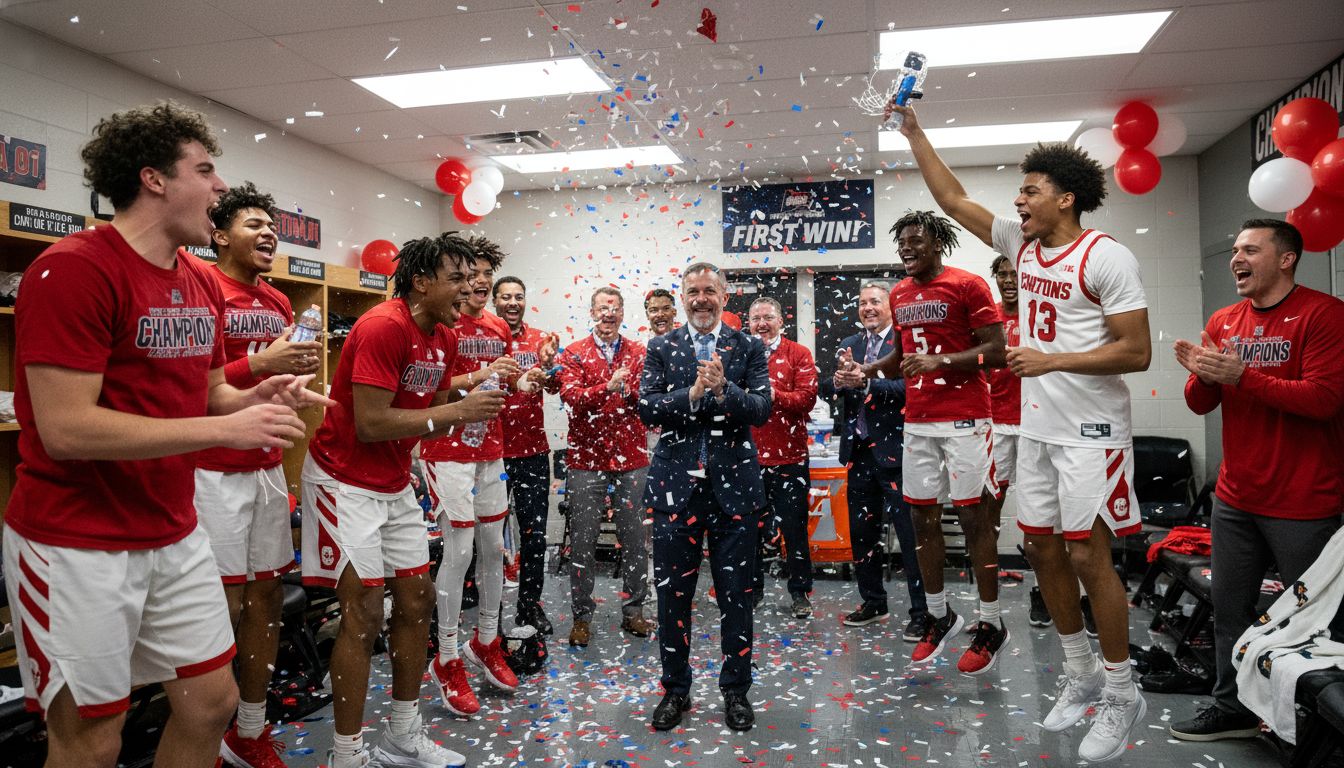
On the other end of the emotional range sat Nebraska, which finally picked up its first NCAA Tournament win and did it with a 76-47 hammering of Troy. For decades, the Cornhuskers occupied the odd corner of the high-major map where football trophies gathered dust and men’s basketball had never tasted a single tournament win. Fred Hoiberg’s slow build, from seven-win seasons to a team that bombs threes and controls the glass, paid off in one emphatic night. Pryce Sandfort’s 23 points and seven threes were the headline, but the bigger story is a program that stayed patient long enough for its coach’s plan to take root. In a tournament obsessed with instant gratification, Nebraska’s breakthrough was a quiet endorsement of sticking with an idea, even when the early returns are brutal.
Elsewhere, the bracket kept offering little case studies in how thin the margins really are. Siena, running on fumes and limited depth, led top-seeded Duke by 11 at halftime and by five inside eight minutes, turning what the Blue Devils expected to be a “cakewalk,” as forward Maliq Brown admitted, into a near-disaster. Freshman guard Cayden Boozer steadied Duke with 19 points, five assists and no turnovers, pushing tempo whenever Siena’s defense lost balance and bailing out an offense short on shooting. The Blue Devils survived 71-65 and earned a date with TCU, but if they bring the same casual approach, the Horned Frogs—already owners of wins over Florida, Wisconsin and Texas Tech—have the profile and the scars to send them packing. Duke escaped; it did not convince.
Down the bracket, the mid-majors many high-majors refused to schedule during the season used Thursday as a loud rebuttal. High Point, which didn’t play a high-major until it ran into Wisconsin, carried itself like a team that knew exactly why its phone never rang in November. Around the country, programs such as Miami (Ohio), Saint Louis, Belmont, Bradley, Northern Iowa and UNC-Wilmington live in the same scheduling no-man’s land: too good to be a stress-free nonconference win, too anonymous to move the marketing needle. The rise of metrics like Wins Above Bubble may eventually chip away at that fear, rewarding teams that take those games, but for now the mid-majors are left to prove their point on the biggest stage available. When High Point’s coach says, “They said we ain’t played nobody—we played somebody now,” that’s not just a victory lap; it’s an indictment of how risk-averse the sport’s power brokers have become.
The day also doubled as a showcase for freshman guards, especially in backcourts that have been handed the keys early. Arkansas’ Darius Acuff Jr. and Meleek Thomas tore through Hawaii’s no-help defense, becoming the first freshman duo in tournament history to each post at least 20 points and five assists in the same game. Texas A&M’s Rashaun Agee headlined the Aggies’ win over a shorthanded Saint Mary’s team that turned it over 18 times and never looked comfortable against an up-tempo attack. Texas leaned heavily on experienced guards to survive BYU despite a 35-point effort from AJ Dybantsa, whose season—and likely college career—ended without enough help around him. If there was a pattern, it was this: in a guard’s game, the teams whose ball-handlers stayed aggressive and under control advanced, and the ones that tightened up or flattened out on offense are headed back to campus.
Louisville and TCU fit neatly into that guard-driven theme, even if they won in different ways. Louisville, missing star freshman Mikel Brown Jr., hit 13 of 25 threes to hold off South Florida, with Isaac McKneely drilling seven triples and the Cardinals nearly coughing up a 23-point lead before closing it out. TCU, a seasoned group that’s made a habit of punching up, built a 15-point edge on Ohio State and then spent the final minutes hanging on as the Buckeyes chipped away. Bruce Thornton’s half-court heave at the buzzer came up short, and the Horned Frogs advanced 66-64, earning the kind of ugly win that coaches will quietly appreciate on the film plane home. None of it was pretty, but in March, nobody asks how you got to the second round once you’re there; they just ask who’s next.
If you strip away the highlight clips and the blown leads, the throughline of Day 1 is simple enough: poise, depth and humility travel; entitlement does not. North Carolina and Wisconsin arrived with credentials and walked out with hard questions about late-game execution and mental toughness. Nebraska, finally, got to walk into a locker room and feel what it’s like to have its season extended instead of autopsied. Duke, Louisville and TCU survived scares that should sharpen their edges for the weekend, while High Point and Arkansas announced they’re not just happy to be here. This is the bargain of March: you get one night to prove who you are, and sometimes, as we saw on Thursday, the sport uses that night to redraw the pecking order in real time.